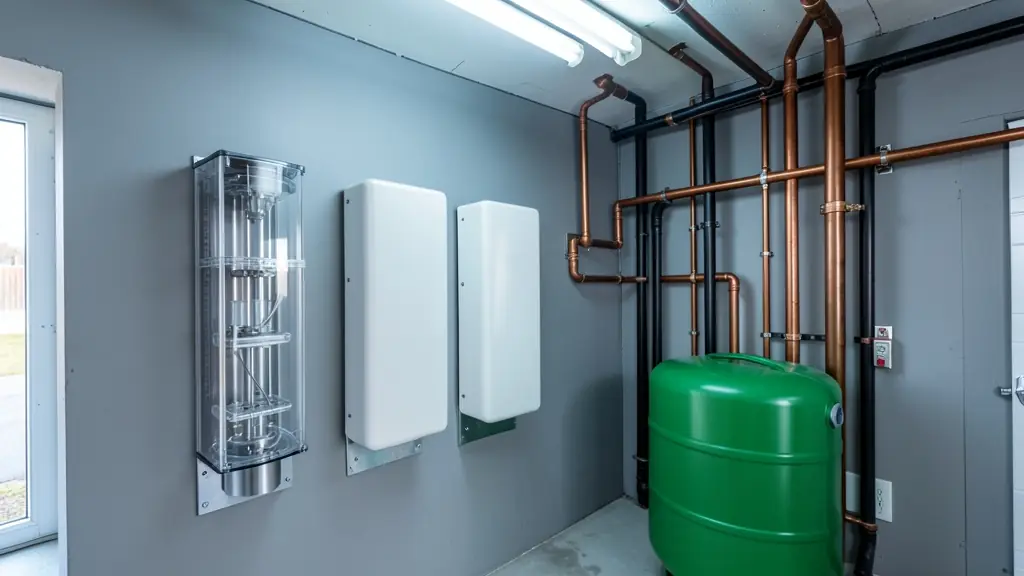
A water filtration system removes sediment, chlorine taste and some metals from your water, either for the whole property at the point where it enters or for a single tap. Whole-house systems protect geysers, taps and appliances from sand and scale, and point-of-use filters improve the water you drink and cook with. Tell us your water source, the size of your property and what bothers you, and independent installers in your area send quotes. It is free, with no obligation to accept.
Whole house or point of use?
The two jobs are different, and many properties use both:
- Whole house (point of entry): fitted on the main line, so every tap, shower and appliance receives filtered water. It protects plumbing and is usually sediment and carbon stages, sometimes with a softener.
- Point of use: fitted at one tap, usually under the sink, for drinking and cooking water. See under-counter water filters.
If dissolved salts are the issue, look at reverse osmosis as well.
Know what is in your water first
Sand, rust, chlorine, iron, hardness and germs each need a different answer, so a filter chosen without information often disappoints. Municipal water in many areas is treated, and the Blue Drop programme rates those systems, but pipes and tanks can add particles or taste. Borehole and tank water vary widely. A laboratory test against SANS 241 tells you which stages you need, and for a borehole it is strongly advised. See borehole water filtration for that case. A filter alone does not make unsafe water safe to drink.
Sizing, flow and upkeep
A whole-house system must match your flow. Too small a housing restricts pressure in the shower and slows the washing machine, so tell installers how many bathrooms, taps and people you have, and whether water comes from the mains or a tank pump. Cartridges clog over time, and the interval depends on how dirty the water is, with silty borehole water needing changes sooner. Ask whether the system has a bypass and pressure gauges so you can see when a cartridge is full, and who services it.
Pricing guide: from about R10,000 for a whole-house system, plus R2,000 to R4,500 to install. Point-of-use filters cost less and are quoted separately.
How to compare quotes
Ask for the same specification from each installer: the number and type of stages, the flow rate, the cartridge size and replacement cost, the warranty and whether installation, fittings and a first set of cartridges are included. Check that the installer is a plumber or treatment specialist who will certify the work. Compare the running cost over three years, not only the purchase price. For drinking water at a business, also ask about a purifier or a commercial water purification option.
What to include in your request
- Your water source: municipal, tank or borehole
- Whole property or one tap only
- Number of bathrooms, taps and people
- What bothers you: sand, taste, scale or colour
- A lab test result, and your suburb or town
Water Filtration Systems for different sites
- Households: a filter on the main line to protect taps and geyser, plus one at the kitchen tap
- Offices and business parks: a point-of-use filter on the kitchenette tap, or a filter on the building supply
- Schools, crèches and colleges: a filter on the tank feed to keep sand out of taps, urinals and kitchen equipment
- Clinics, practices and care homes: a filter set on the supply line with a service log that staff can show an inspector
- Lodges, hotels, restaurants and events: whole-house filtration for guest rooms, laundry and kitchen so geysers and taps last longer
- Factories, mines and building sites: a larger filter bank on the incoming supply ahead of canteens, wash bays and process lines
- Shops, gyms and refill stations: a filter ahead of coffee machines, ice makers and basins to protect equipment and taste
- Farms, smallholdings and villages: a sediment filter on borehole or dam water, usually with extra treatment after a lab test
Frequently asked questions
How much does a whole-house water filtration system cost?
Will a filter make my borehole water safe to drink?
How often do filter cartridges need changing?
Do you supply and fit the filters?
Water Filtration Systems by province and city
- Johannesburg
- Pretoria
- Centurion
- Midrand
- Sandton
- Randburg
- Roodepoort
- Krugersdorp
- Randfontein
- Germiston
- Boksburg
- Benoni
- Kempton Park
- Alberton
- Vanderbijlpark
- Vereeniging
- Durban
- Pinetown
- Pietermaritzburg
- Richards Bay
- Newcastle
- Ladysmith
- Gqeberha (Port Elizabeth)
- East London
- Kariega (Uitenhage)
- Mthatha
- Cape Town
- Bellville
- Paarl
- Stellenbosch
- George
- Worcester
- eMalahleni (Witbank)
- Middelburg
- Secunda
- Mbombela (Nelspruit)
- Rustenburg
- Brits
- Klerksdorp
- Potchefstroom
- Mahikeng
- Polokwane
- Tzaneen
- Kimberley
- Upington
- Bloemfontein
- Welkom
- Sasolburg