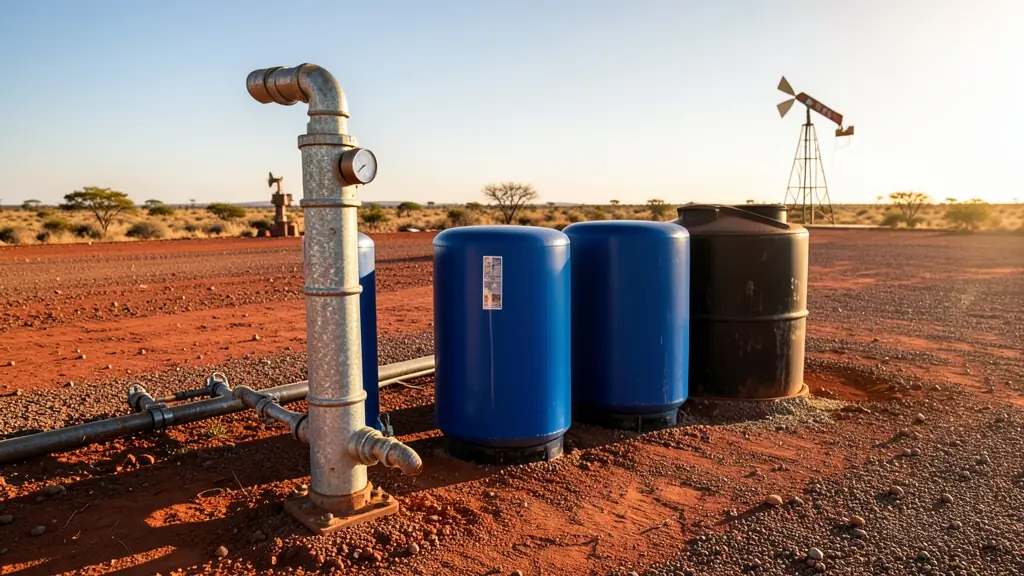
Borehole water filtration starts with a lab test, because no two boreholes are alike. Water that looks clear can carry iron, manganese, hard minerals, nitrates or bacteria, and each one needs a different fix. A good installer tests first, then builds a treatment train that suits your water and your use: sediment, softening, reverse osmosis or UV. Whether you farm outside Lephalale, run a lodge near Hoedspruit or live on a plot in Gauteng, send one request and local installers quote you directly. It is free and without obligation.
Test the water before you buy anything
Ask a SANAS-accredited or other reputable laboratory to test a sample, and compare the results against SANS 241. Take the sample the way the lab tells you, in their clean bottle, from a tap near the pump, after letting the water run. A basic drinking water test usually covers:
- Iron and manganese: rusty stains, brown water on standing, a metallic taste.
- Hardness and total dissolved solids: white scale on kettles, geysers and taps.
- Nitrates: a concern near farms, feedlots and septic systems, especially for babies.
- Bacteria such as E. coli: a sign of contamination from animals or sewage.
Retest once a year, and after floods or drought.
Matching the treatment to the problem
The usual order of treatment is simple. A sediment filter removes sand and silt first. Iron and manganese are often handled with an oxidising filter bed. A softener reduces scale where the water is hard. Disinfection with UV purification deals with bacteria. Dissolved salts and nitrates call for reverse osmosis, which is normally used at one tap for drinking and cooking rather than the whole house.
Do not let anyone sell you a full train before the test results are in. Many boreholes need only two of these stages.
Flow, pressure and power
Filters are sized to the flow your pump delivers. Tell the installer the pump size, the borehole yield, the tank volume and how many people and animals use the water. Whole-house treatment needs enough flow and pressure at peak times, so many sites treat water going into a tank and boost the pressure after it. If load shedding stops the pump, UV lamps and booster pumps stop too, so ask about a bypass or a backup plan. Compare this with a smaller system at the kitchen sink, such as an under-counter filter.
Comparing installer quotes
Send each installer the same lab report. A fair quote names the treatment stages and why each is needed, the flow rate the system can handle, the installation, the cost of media and cartridges, and the service plan. Ask how backwashing works and where the waste water goes. Prices are quoted per site, because every borehole differs. A cheap system that ignores your test results will cost you more when the media fails within the year.
What to include in your request
- A recent lab report if you have one
- Borehole yield, pump size and storage tank volume
- Who and what uses the water, and how much
- Problems you see: stains, scale, smell, taste
- Whether you want drinking water only or the whole property
Borehole Water Filtration for different sites
- Households: a sediment, softener and UV train on a plot or smallholding with its own borehole
- Offices and business parks: treated borehole water for a rural office park where the municipal supply is unreliable
- Schools, crèches and colleges: tested and disinfected borehole water for a farm school, with a clean tap for children
- Clinics, practices and care homes: tested, filtered and disinfected borehole water for a rural clinic, with a backup supply
- Lodges, hotels, restaurants and events: iron and hardness removal for a lodge so showers, laundry and kitchens stay clean
- Factories, mines and building sites: borehole water treated for a packhouse, abattoir or workshop that needs steady quality
- Shops, gyms and refill stations: a farm stall or small shop that treats borehole water before drinking and washing
- Farms, smallholdings and villages: iron, hardness and bacteria control for a farm homestead, staff housing and stock water
Frequently asked questions
Is borehole water safe to drink?
How do I remove iron stains from borehole water?
Will a sediment filter alone be enough?
Do you install borehole filters?
Borehole Water Filtration by province and city
- Johannesburg
- Pretoria
- Centurion
- Midrand
- Sandton
- Randburg
- Roodepoort
- Krugersdorp
- Randfontein
- Germiston
- Boksburg
- Benoni
- Kempton Park
- Alberton
- Vanderbijlpark
- Vereeniging
- Durban
- Pinetown
- Pietermaritzburg
- Richards Bay
- Newcastle
- Ladysmith
- Gqeberha (Port Elizabeth)
- East London
- Kariega (Uitenhage)
- Mthatha
- Cape Town
- Bellville
- Paarl
- Stellenbosch
- George
- Worcester
- eMalahleni (Witbank)
- Middelburg
- Secunda
- Mbombela (Nelspruit)
- Rustenburg
- Brits
- Klerksdorp
- Potchefstroom
- Mahikeng
- Polokwane
- Tzaneen
- Kimberley
- Upington
- Bloemfontein
- Welkom
- Sasolburg