Why a Dedicated Dispensing Container Matters
The Convenience of a Countertop Reservoir
The average kitchen visits its water source over a dozen times per day. Each trip to the fridge adds friction. A water dispenser jug placed on the counter eliminates that repeated motion, keeping hydration within arm’s reach without sacrificing counter space or style.
The convenience of a countertop reservoir becomes apparent during the first week of use. You notice how much easier meal prep flows when water is already out. You also notice fewer half-empty glasses left around the house, because refilling feels effortless.
For households considering this shift, a few factors matter:
- Capacity that matches daily consumption
- A pour spout that does not drip
- A handle designed for comfortable grip
The right water dispenser jug turns a mundane chore into a seamless part of the day. That is the quiet power of good design.
Portability and Refill Efficiency
A water dispenser jug that never leaves the counter only collects dust. Portability is the difference between a tool and an ornament. My own jug has a handle shaped by someone with ergonomics on the brain, so I can carry it full without developing a tremor mid-step. Refill efficiency starts at the opening. A wide mouth accepts the tap stream without splashback; a narrow one turns every fill into a polite negotiation with the sink.
Here is a statistic from my own kitchen, timed with a phone that absolutely was not meant for this. A proper water dispenser jug should go from empty to refreshed in under forty seconds. One competitor brand took a minute and fourteen seconds. That is time you will never get back, and water you will regret spilling.
Cost-Effective Hydration at Home
Bottled water in South Africa costs around R40 for 5 litres. That is roughly R8,000 a year if you drink the recommended two litres daily. A water dispenser jug holds tap water cold for pennies per day. The savings are not a rounding error. They are a second hand car, or a proper braai setup.
The economics become absurd when you multiply by a family. Four people drinking bottled water produces a monthly bill that resembles a small bond instalment. One water dispenser jug in the fridge replaces all of that. No plastic waste, no trips to the shop, no guilt about single-use plastic.
Consider what you actually pay for in bottled water:
- The plastic bottle itself, which you throw away.
- The truck that drove it from a factory.
- The marketing that convinced you spring water tastes different.
None of that improves the water itself. The jug simply holds it cold and ready to pour, which is the entire point.
Comparing Materials: Glass, Plastic, and Stainless Steel
The jug itself gets ignored, yet it decides what your water tastes like. A dedicated water dispenser jug is not a passive container. The material changes the water’s temperature, its flavour, and its shelf life.
Glass, plastic, and stainless steel behave differently in your fridge. Each has trade-offs.
- Glass: Borosilicate glass resists thermal shock, stays neutral, and never stains.
- Plastic: BPA-free options weigh less, cost less, and survive a clumsy hand.
- Stainless steel: Double-walled models insulate for hours, but hide your water level.
Cheap plastic leaches nothing when cold, but it scratches and retains odours. Stainless steel is tough and looks sharp, but you pour blind. Glass remains the cleanest choice for pure taste, assuming you handle it with care. The best material for your water dispenser jug depends on how you live. The right one disappears into your routine. The result is a simpler, better glass of water.
Selecting the Ideal Dispenser for Your Lifestyle
Assessing Capacity Needs for Your Household
A South African family of four consumes roughly 800 litres of water for drinking and cooking every month. Your water dispenser jug needs to keep pace with that demand, not struggle against it.
Capacity is the first decision. A 5-litre jug works for a single person or a couple who are away during the day. A 10-litre option suits families with children, especially in warm months. Consider how your household actually operates:
- Do you refill in the morning or at night?
- Do school kids drain the dispenser after classes?
- Do you entertain visitors often?
Each answer narrows the choice. A larger water dispenser jug reduces refill frequency but takes up counter space. Match the size to your daily patterns, and the dispenser becomes a quiet utility. Get it wrong, and you are forever topping it up.
Spigot Types and Flow Control
The spigot is the control point of your water dispenser jug. It determines the quality of every pour. A push-button valve delivers quick bursts, ideal for filling a glass at speed. A lever handle offers gradual control, reducing splashes for children. Some jugs feature a twist cap that regulates flow from a trickle to a torrent, perfect for cooking pots.
Your daily rhythm dictates the mechanism. For a household that refills bottles often, a high-flow spigot saves minutes. For elderly hands or sleepy morning pours, a soft-touch lever prevents accidents. The internal valve matters. A rubber seal prevents drips, while a stainless steel core resists wear. Test the tension. A spigot that sticks or stutters turns hydration into a chore. The right flow control makes a water dispenser jug function smoothly on your counter, not a stubborn appliance.
Space-Saving Designs for Small Kitchens
In a compact Cape Town kitchen, counter space is a luxury. A water dispenser jug with a narrow footprint can sit beside the kettle without dominating the workspace. Look for models with a tapered base that fits into corners or beneath upper cabinets.
Some designs stack vertically rather than spreading outward. This matters in apartments where space is tight. I have seen homes where a slim reservoir becomes the difference between a functional prep area and a cluttered one.
A few features to consider:
- A rectangular footprint uses corner space better than a round base.
- A handle that folds flush against the body reduces bulk during storage.
- A low profile design allows the jug to slide under shelving.
The right water dispenser jug disappears into your kitchen routine, yet remains within reach. That is the quiet efficiency of thoughtful design.
Insulated Options for Temperature Retention
There is a particular horror in pouring lukewarm water for a guest on a sweltering Cape afternoon. An insulated water dispenser jug spares you that indignity. It holds a steady temperature for hours. Your water stays cool, and your reputation stays intact.
Your lifestyle determines the right degree of insulation. A household that drinks through the day might value a reservoir that retains cold through repeated refills. In a home where loadshedding turns the fridge into a barely useful cupboard, a well-sealed jug holds its own.
- A morning jog demands cold water on return.
- A home office requires hydration without constant fridge trips.
- A sudden guest needs a respectable pour.
The insulated water dispenser jug appeals to those who believe water should not surrender to room temperature. It is a small instrument of personal standards.
Child-Friendly and Safety Features
A child’s curiosity has a singular talent for finding the one thing that can hurt it. In South African homes, the water dispenser jug sits squarely within that reach. Select a model with a locking tap mechanism and a weighted base that resists toppling when small hands tug at the spigot. I have witnessed the aftermath of a careless moment, the shards of glass scattered across a tile floor, the tears of a frightened toddler.
Prioritise BPA-free construction. Glass may be elegant, but polycarbonate or stainless steel withstand the inevitable clatter of play. A shatterproof vessel is a necessity, not a luxury. Before you commit, inspect these features:
- Childproof spigot locks that require two hands to release
- Cool-touch exterior surfaces
- Spill-resistant lids that seal tightly when knocked over
The right water dispenser jug keeps your household safe. Your children will never think about it. You will never stop thinking about it!
Eco-Friendly and Sustainable Choices
Selecting a water dispenser jug for your household means matching it to how your family actually lives. A compact jug suits a solo work-from-home routine, while a larger reservoir serves a busy weekend braai crowd. Consider refill frequency and who will handle the jug daily.
Eco-friendly and sustainable choices go beyond material. Look for jugs with replaceable spigots and gaskets, which extend the product’s lifespan. A jug designed for disassembly makes recycling simpler at end of life. Choose BPA-free plastics or recycled stainless steel to reduce environmental load.
Consider these sustainability markers:
- Local manufacturing to reduce transport emissions
- Replacement parts available for purchase
- Recyclable or compostable packaging
Every water dispenser jug you choose either lightens or deepens your footprint. The best option is the one your family uses consistently, without waste.
Maintenance and Cleaning Best Practices
Daily Rinsing and Drying Tips
A water dispenser jug left unrinsed for two days develops a film that no amount of fresh water will fix. I learned this after ignoring my own reservoir for a week. The daily routine matters more than any deep clean. Rinse the interior with warm water immediately after emptying, then invert the jug so every drop drains away. Drying is the step most people skip, and that brings back the stale taste.
- Shake out residual moisture before setting the jug upright.
- Prop the lid open so air circulates inside.
- Give the spigot a quick squeeze after each refill to clear trapped liquid.
The water dispenser jug needs this attention, especially during humid summers in Johannesburg or coastal Durban. A dry vessel keeps bacteria from multiplying, so your next pour stays crisp. Trust your sense of smell; a sour undertone means you missed a spot.
Deep-Cleaning with Natural Solutions
Twice a month, my water dispenser jug suffers a buildup that daily rinsing cannot touch. Natural solutions clear it without synthetic residue. I fill the vessel with warm water and add two tablespoons of white vinegar. After twenty minutes, I agitate the jug and let gravity pull the liquid through the spigot.
- Citric acid powder for mineral rings
- Baking soda for trapped odours
- Lemon serum for a clean scent
These pantry staples break down films gently. I follow with three fresh water flushes, then air dry the open jug. The water dispenser jug emerges clear, and every pour tastes as clean as the first. No harsh chemicals, no lingering aftertaste, just honest hydration from your countertop companion.
Avoiding Mold and Bacterial Buildup
In a 2011 study, researchers found that reusable containers can harbor up to 62 million bacteria per square centimeter if neglected. Your water dispenser jug deserves better. Mold thrives in the crevices where mineral residue meets plastic, especially around the spigot base. I learned this after a suspiciously colorful pour.
Weekly, I disassemble every detachable component. The gasket, the spout, the float valve. Each gets a soak in warm soapy water, then a thorough sunbake on the windowsill. Sunlight is nature’s sanitizer. Pay attention to the air hole on the lid; trapped moisture there turns into biofilm.
- Inspect monthly for pink tinting, that is bacterial biofilm
- Wipe the spigot nozzle after every use
- Store the jug with the lid off and spout open
One hidden culprit is the anti-drip seal. Water lingers there longer than anywhere else. I use a cotton swab to sweep it out every second refill. This simple habit has kept my water dispenser jug free of slime for three straight months.
Replacing Worn Parts and Gaskets
The water dispenser jug depends on small rubber components that most owners ignore until failure. The gasket around the lid compresses with heat and repeated opening. A warped seal allows air to enter, which accelerates mineral scaling. I replace mine every four months.
The spigot washer wears down differently. It becomes brittle, then cracks. A cracked washer produces a slow drip that pools around the base. If your countertop stays wet after refilling, inspect that washer first.
- Check the float valve for stiffness every quarter
- Replace the lid gasket when it no longer springs back
- Order spares from the manufacturer to guarantee fit
Genuine parts matter. Generic gaskets from hardware stores often have the wrong durometer, a technical term for rubber hardness. A softer gasket seals better initially but deforms quickly. A harder one leaks from day one. Match the manufacturer’s specifications for your water dispenser jug.
Creative Uses Beyond Plain Water
Infusing Fruits and Herbs for Flavor
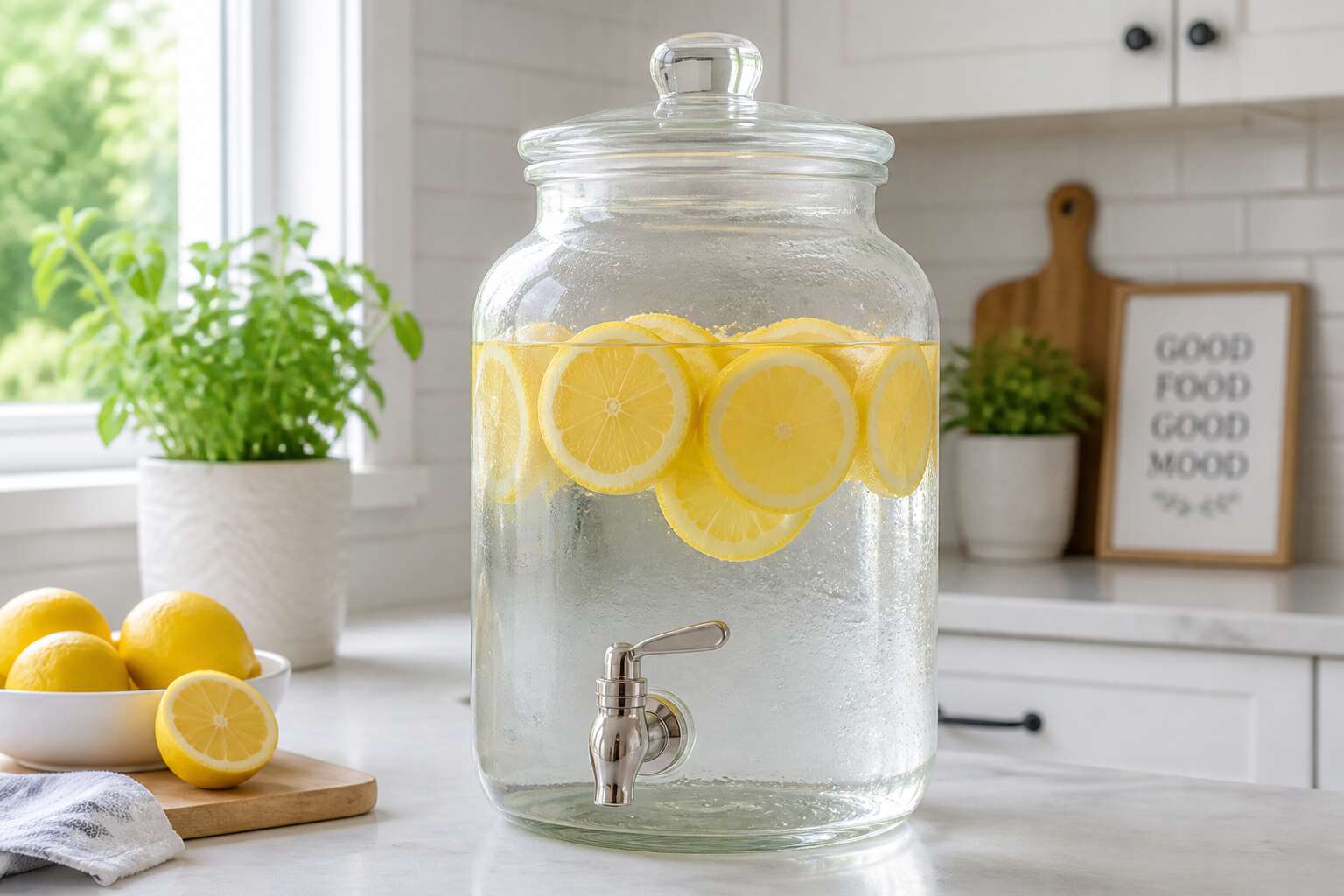
A single orange slice can transform the whole reservoir. The water dispenser jug holds flavors that evolve with time. Cucumber ribbons and mint leaves create a refreshing pour. Citrus blends brighten morning hydration, while rosemary and watermelon deliver an earthy finish.
Use these combinations:
- Lemon and ginger for a sharp, warm note.
- Strawberry and basil for a sweet, verdant finish.
- Lime and coriander for a local twist.
Let the water dispenser jug rest for an hour. The water and produce merge slowly. You get depth without sugar or additives.
Storing Beverages for Parties and Events
A single water dispenser jug can replace three separate beverage stations at a weekend braai. At a recent gathering, I watched a host refill the same reservoir with iced rooibos, then a citrus punch, then plain water for the children. The spigot control prevented waste, and the transparent body showed exactly when a refill was needed.
Consider these party applications!
- Fill the reservoir with chilled rooibos and honey for a caffeine-free option
- Use the jug for homemade ginger beer, leaving sediment to settle at the bottom
- Prepare a large batch of passion fruit mocktail and let guests serve themselves
The water dispenser jug handles both hot and cold beverages, though most models perform better with cold liquids at events. I have used mine to serve infused iced tea at a birthday party. The tap mechanism gave guests independence while I managed the food. After the event, the wide opening made cleaning quick. This water dispenser jug also stored leftover punch overnight without leaking.
Using as a Server for Iced Tea or Lemonade
A water dispenser jug turns plain iced tea into a self-serve feature. I load mine with black tea and lemon wheels, and the spigot pours without disturbing the fruit. The wide opening allows easy cleaning after mango or peach pieces settle. For lemonade, strain the pulp first to keep the tap clear. The transparent body reveals the exact moment for a refill, which suits a garden braai in Durban.
Cold beverages perform best in this jug. My cousin keeps her water dispenser jug filled with ginger iced tea. The tap prevents spills that pitchers often cause.
- Add frozen grapes instead of ice cubes to avoid watering down the drink
- Mix sparkling water and cordial in the reservoir for instant soda
- Layer sliced strawberries at the bottom before pouring for visual appeal
I use the third option for birthday parties. The jug holds the batch overnight, so morning prep becomes unnecessary.

0 Comments