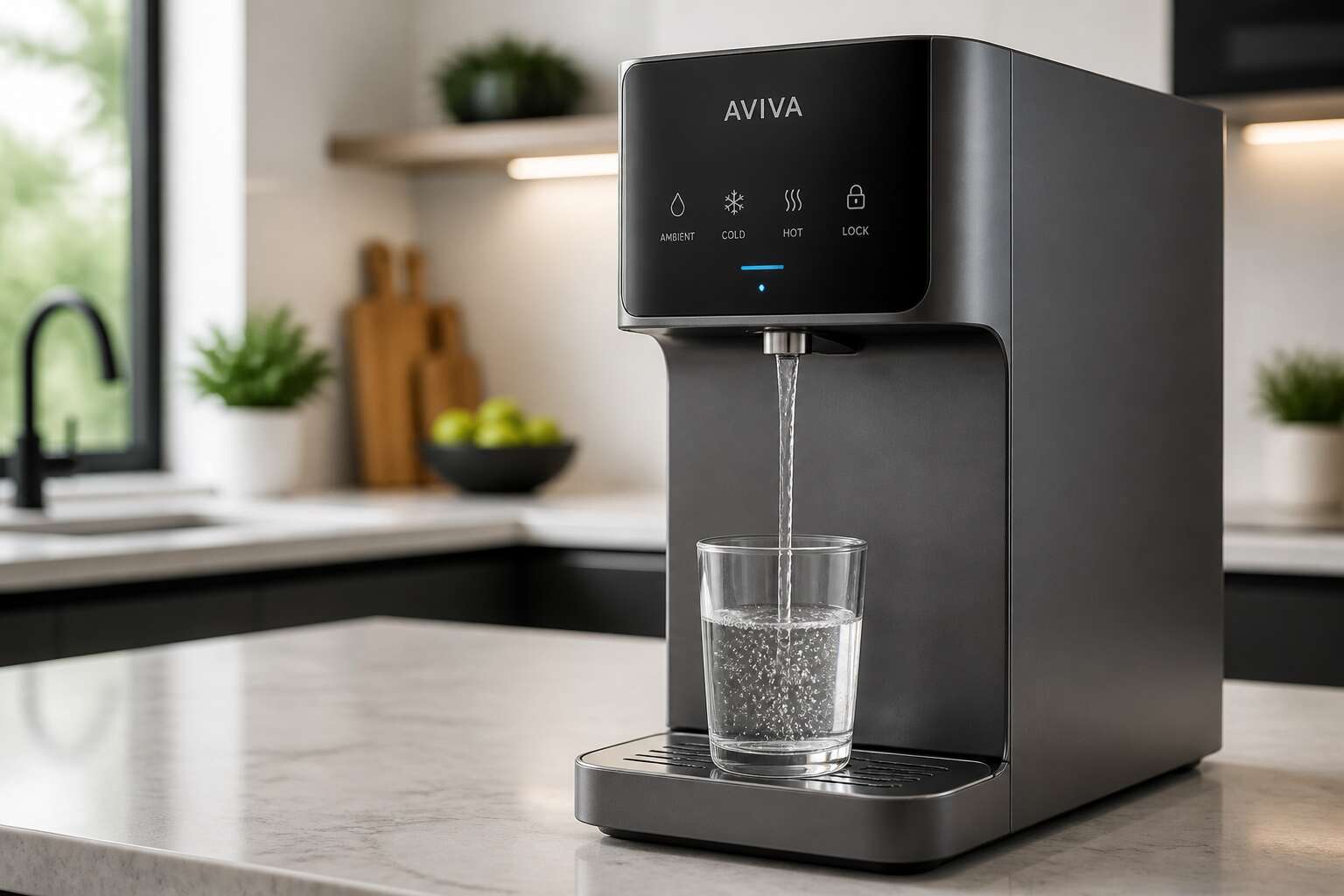
Essential Planning and Design Considerations
Every water dispenser project begins with a decision most people never see coming. You are planning for a future where water access is predictable, reliable, and safe. That future requires forethought that borders on the uncanny, because the small details you choose today determine success or failure over years.
Essential planning in South Africa starts with site inspection and user volume. Consider these:
- Assess the physical space and electrical access
- Determine daily consumption patterns
- Match heating or cooling capacity to demand
- Plan for maintenance access
Design considerations extend beyond the dispenser unit itself. Water pressure varies across regions, and a water dispenser project that ignores local plumbing conditions invites constant frustration. I have watched installations fail for exactly this reason! The countertop material, the drain distance, even foot traffic shapes the final layout. Ignore these elements and you are building a costly oversight.
Choosing the Core Components and Technology
South Africa’s taps deliver water that varies wildly in quality. That reality makes a water dispenser project a matter of health, not convenience. Pick the wrong components and the unit will fail in months.
Start with the core. The flow sensor must tolerate mineral buildup. The heating element needs a thermostat that survives hard water. In any water dispenser project, the pump fails first, so choose one that runs dry without burning out.
Here are the essential parts to specify early on:
- A food grade water pump
- A carbon filter rated for the local sediment load
- A digital temperature controller with dry run protection
The brain matters just as much. A simple microcontroller reads water level, logs filter life, and triggers a failsafe when a valve sticks. Keep the code simple. A dispenser that fails at 10 PM is a dispenser that gets bypassed by frustrated hands.
Step-by-Step Construction and Assembly Guide
South Africans lose nearly 40% of municipal water to leaks and inefficient use. That statistic pushed me to build my own water dispenser project. The assembly process demands patience, but the payoff is a unit that runs on 12V and sips solar power.
Start with the frame. Align the acrylic panels before tightening any screws. The pump sits lower than the reservoir to avoid cavitation. Then wire the float switch; it prevents overflow and saves you from a wet floor. For the electronics, I used a relay module to keep the control circuit isolated from the mains.
- Mount the pump bracket first, then the reservoir.
- Route the silicone tubing with a gentle slope to prevent airlocks.
- Test the float switch before sealing the tank.
Finally, bolt the spout assembly and check for drips. A dry joint here means wasted litres.
Testing, Calibration, and Troubleshooting
Nobody wakes up excited to test a water dispenser project, yet every engineer I know has a story about a machine that served lukewarm iced water during a client demo. Testing is where the real work starts, and that is exactly why it matters. You are not checking sensors. You are checking your patience.
Calibration is a separate challenge. You set the thermistor to read 4 degrees, and it gives you 9. You adjust it again, and now it reads 95. The fix is simple. Small offsets, repeated readings, and a willingness to admit your soldering iron caused the problem all along.
- The dispenser clicks but delivers nothing, check the solenoid valve.
- The motor hums and stops, that is a seized pump.
- Every reading jumps around, earth your wiring properly.
Troubleshooting a water dispenser project means ruling out the boring culprits before blaming the code. A loose connector has broken more firmware than any bug ever has. Trust me on that one.
Maintenance, Upgrades, and Long-Term Care
Every water dispenser project eventually faces the quiet demands of upkeep. I have watched installations thrive for years simply because someone paid attention to the small details. Descaling, filter swaps, and seal checks are not glamorous, but they decide whether your system delivers crisp water or becomes a silent frustration.
Upgrades should feel thoughtful, not rushed. For long-term care, I recommend evaluating three things regularly:
- the filtration medium
- the cooling mechanism
- the plumbing connections
Each part ages differently, and ignoring one can strain the rest. A system that adapts to shifting usage patterns will outperform one that never changes.



0 Comments