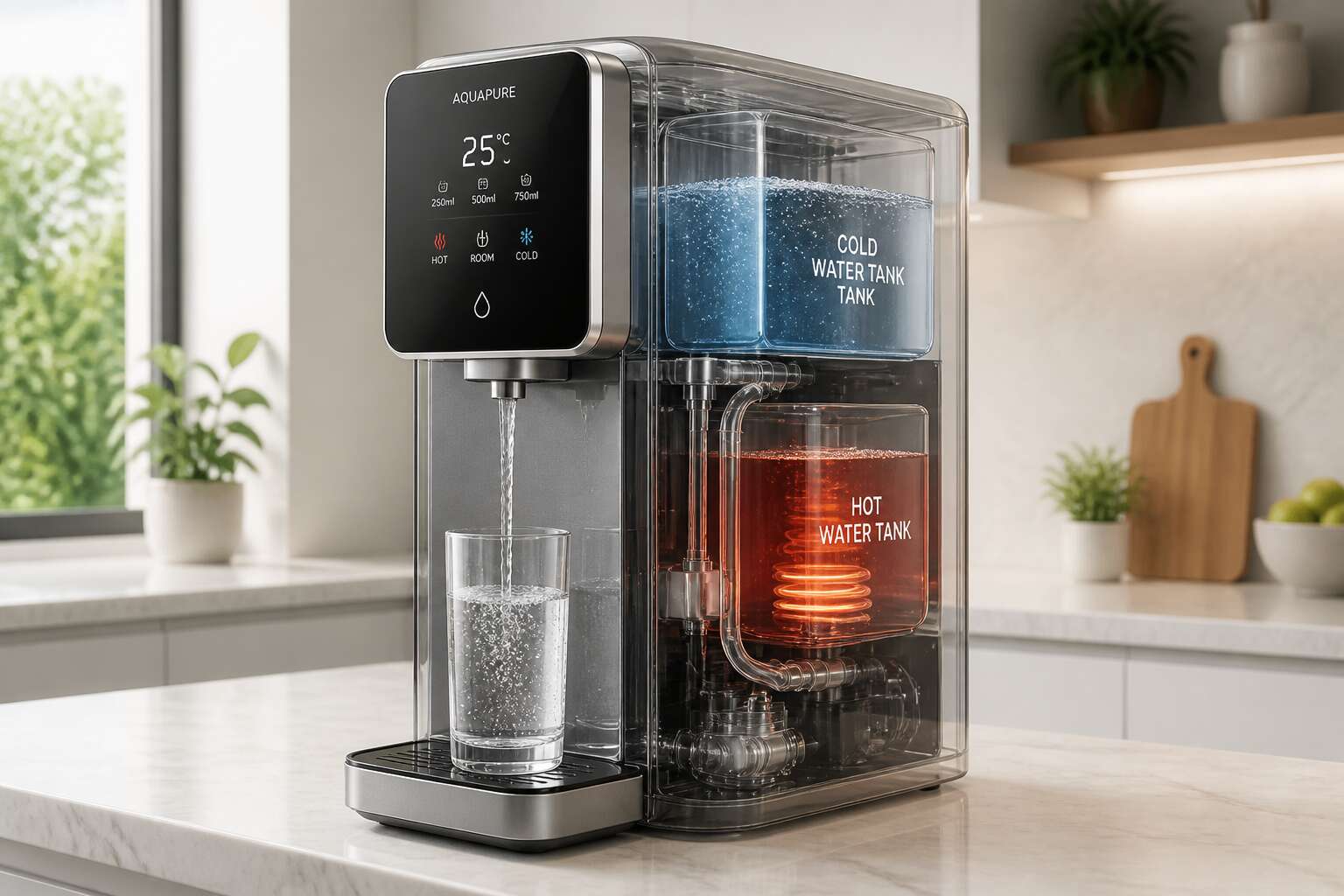
Core Components That Make a Water Dispenser Function
The Role of the Water Reservoir and Bottle Assembly
Over a typical service life, a residential water dispenser quietly processes upwards of 200,000 liters. At the heart of this operation is the reservoir, a holding tank that tempers the raw supply from the bottle assembly before delivery. The bottle assembly itself is more than a plastic shell; it is the system’s intake point, where the inverted bottle’s neck seals against a probe. This probe opens a valve to release water only under exact conditions.
Gravity feeds water downward, but the apparatus also relies on air pressure reconciliation. A float valve or pressure sensor monitors levels and halts flow when the chamber is full, preventing overflow.
– The air vent, which equalizes internal pressure.
– The outlet tubing, directing water to the faucets.
– The sealing gasket, ensuring a contaminant-free seal.
This interplay allows the reservoir to offer a steady, constant head pressure for each dispensing cycle. When you draw a glass, the chamber empties slightly, triggering the probe to admit more water from the bottle. The cycle is continuous, a simple equilibrium of gravity and air that defines how water dispenser works for millions of South Africans.
Faucet Valves and Flow Regulators
When you press a lever, you are engaging a small but decisive mechanism! The faucet valve is a rigid mechanical barrier. It separates the stored water from the glass. I have seen many people assume it is a simple switch, but it actually relies on a spring-loaded stem or a ceramic disc. These parts seal tightly, so no water leaks when idle.
Flow regulators are the other half of this equation. They maintain a steady stream even as pressure in the reservoir fluctuates. A common type is the rubber washer with a fixed aperture. It resists the urge to surge.
- Compression valves for basic models
- Diaphragm valves for precise flow control
- Ball valves for quick on/off action
That controlled release is the heart of how water dispenser works in everyday use.
Safety Sensors and Drip Tray Mechanism
Safety sensors are the quiet guardians of the machine. They detect when the reservoir is empty, preventing the heating element from running dry. In many models, a thermistor monitors water temperature and cuts power if things get too hot. That vigilance is part of how water dispenser works, a silent contract between machine and user.
The drip tray mechanism is simpler yet equally critical. It collects overflow and condensation, keeping the counter clean. Some trays use a float that signals when full, reducing the risk of spills. Sensor types you might encounter:
- Magnetic float switches for level detection
- Thermal fuses for overheat protection
- Capacitive sensors for touch-free dispensing
Each component contributes to the overall reliability. When you understand this layer of functionality, you see why a dispenser is more than a faucet.
The Step-by-Step Dispensing Process Explained
How Gravity Feeds Water to the Taps
Water descends purely by gravity. The reservoir’s height above the taps creates a measurable hydrostatic pressure. Open the faucet, and that pressure forces the liquid through a narrow passage. The vertical distance between the water surface and the outlet determines the flow rate. Each metre of height adds nearly 10 kilopascals of force. This is the core physics behind the process. The sequence unfolds in clear stages:
- The liquid exits the reservoir through a small opening.
- It travels down a sealed channel that prevents air locks.
- It enters a buffering chamber to smooth out surges.
- It reaches the tap and pours out steadily.
As the reservoir empties, the pressure declines, but the buffering chamber maintains a reliable stream. That graceful, predictable descent explains how water dispenser works without any moving parts beyond the tap itself.
The Cooling Cycle: Compressor and Evaporator
Few realise that the water waiting in the reservoir has not yet reached its serving temperature. The compressor drives refrigerant through a sealed loop, and the evaporator wraps around a small cooling tank. Water from the reservoir enters that tank, and heat transfers away, dropping the temperature within minutes. That is how water dispenser works for chilled dispensing, yet the physical process deserves closer examination.
- The reservoir feeds water into the cooling tank through a small inlet.
- The compressor pressurises refrigerant, creating a temperature differential.
- The evaporator absorbs heat from the tank walls.
- A thermistor signals the control board when the water reaches 5 to 8 degrees Celsius.
- The faucet opens to release the chilled water.
Each cycle repeats automatically as the compressor cycles on and off. Understanding how water dispenser works in full requires observing this loop, including the faucet’s role.
The Heating Cycle: Thermostat and Boiling Tank
The boiling tank is the most misunderstood part of any hot water dispenser. A thermostat reads the water temperature continuously, and the control board decides when to fire the heating element. This is the core of how water dispenser works for hot taps, because the tank must keep water at a precise boil without wasting electricity.
- The thermistor detects a drop below 85 degrees Celsius.
- The heating element receives power and warms the tank walls.
- As the water boils, steam rises into the vent tube.
- The thermostat cuts power once the temperature hits 96 degrees.
You get hot water through a separate valve, never touching the chilled reservoir. A pressure-relief system handles the steam, and the backup thermostat prevents overheating. That cycle repeats every few minutes, quietly and efficiently.
Mixing and Flow Control During Dispensing
When you press the tap, the dispenser’s internal sequence is more deliberate than it appears. Water moves from the reservoir through a flow regulator, which sets a steady rate regardless of pressure changes. From there, the hot and cold lines meet at a thermostatic mixing valve. This component blends the streams to a preset temperature before the water exits.
- The tap opens and the flow regulator stabilises the incoming water.
- The mixing valve compares hot and cold inputs.
- The outlet temperature is maintained by tiny adjustments.
This continuous balancing is why you get a steady cup of tea without scalding or a lukewarm surprise. Flow control also minimises splashing, and the drip tray catches any residual drops. Understanding this process helps you appreciate how water dispenser works in everyday office life.
Shutoff and Drip Prevention Features
The final second of every pour hides a mechanical quietude. When you release the tap, a spring-loaded plunger snaps shut within milliseconds, cutting off the flow before the last drop escapes. That precision is central to how water dispenser works. Behind the spout, an internal diaphragm creates a pressure differential that pulls residual water back into the line, preventing the telltale dribble. A secondary float valve in the drip tray catches stray condensation and redirects it to the waste basin. This is calibrated tension and timing.
- The tap lever springs back, closing the valve seat.
- A vacuum forms in the outlet, retracting residual water.
- The drip tray’s float valve traps and drains overflow.
That sequence happens in under a second, yet it defines the difference between a clean corner and a sticky floor. Understanding this shutoff reveals the silent discipline of every unit, a discipline that makes your daily pour feel effortless.
Variations in Water Dispenser Technology
Bottled Water Dispensers vs. Bottleless Systems
Walk into any office in Johannesburg and you will see both types of dispensers. The bottled unit relies on a 19L carboy, while the bottleless model taps straight into the municipal supply. This split changes how water dispenser works in everyday use. Both units still control flow and temperature, but the source determines the rest.
Bottleless systems require a direct water line. They often include multi-stage filtration. Bottled systems, by contrast, bring water that is already treated. In my experience, this shapes the upkeep:
– Bottled units need sanitised bottles and periodic drip tray cleaning.
– Bottleless units need filter replacements and occasional descaling of the internal tank.
The choice affects installation, running costs, water quality, and who is responsible for maintenance. In rural areas with intermittent municipal pressure, a bottled system is often the more reliable option.
Countertop, Freestanding, and Built-In Models
Countertop units suit smaller kitchens and boardrooms in South Africa. They compress the reservoir and heating tank into a low profile, which limits storage capacity but makes the unit portable. Freestanding models stand on the floor, allowing a larger compressor and a bigger drip tray. Built-in dispensers slide into cabinetry, so the front grille must stay clear for airflow.
This physical footprint determines how water dispenser works in each setting. Countertop models need a sturdy surface and a nearby socket. Freestanding units require clearance at the rear. Built-in models complicate service access, because the filter housing sits at the back.
- Available floor space
- Proximity to the water line
- Ease of filter replacement
Installers weigh these factors before recommending a configuration. A built-in unit changes how water dispenser works for the plumber, often demanding partial removal of the cabinet for routine upkeep.
Instant Hot Water Dispensers and Point-of-Use Units
The instant hot water dispenser skips the storage tank entirely. It runs water through a heating coil the moment you press the tap, which changes how water dispenser works for anyone used to waiting on a boiler. The trade-off is simple: you get near-boiling water immediately, but the flow rate drops because the unit can only heat so fast. Point-of-use units operate differently again. They connect straight to the building’s plumbing, no bottle involved. That means the incoming water pressure dictates performance. A weak municipal line can produce a pathetic trickle, so installers should check the pressure before recommending this option. For a small South African office, either system cuts down on bulky reservoirs, but the right choice depends on your plumbing.
Troubleshooting Common Water Dispenser Issues
Water Flow Problems and Clogged Lines
When the stream weakens to a trickle, the culprit is often a clogged line. Understanding how water dispenser works helps you diagnose these blockages. Sediment from the bottle settles inside the tubing, restricting flow. A second cause is an airlock trapped in the system. Both issues respond to simple fixes.
Check the faucet screen first, as it collects debris easily. Then inspect the tubing for kinks or mineral scale. For stubborn clogs, flush the lines with a vinegar solution. Regular cleaning prevents these problems. If flow remains weak, test the pressure valve. Look for these warning signs:
- Delayed dispensing after a long pause
- A sputtering stream with air bubbles
- Noticeably slower filling of a cup or kettle
Temperature Inconsistencies in Heating and Cooling
Nothing ruins a morning routine faster than a dispenser that serves lukewarm coffee and fridge-temperature water. These symptoms point to a drifting thermostat or failing sensor, parts that govern how water dispenser works.
In my experience, mineral scale is the usual suspect. It coats the heating element, forcing longer cycles that overshoot and then plunge. On the cooling side, a dusty condenser coil makes the compressor labour without reaching the set point. Listen for rapid cycling and feel for hot spots on the side panel.
- Check the thermostat probe for scale buildup
- Clean the condenser fins with a soft brush
- Test the thermistor with a multimeter
These simple checks restore the steady temperature band South African households rely on.
Leaks, Drips, and Sealing Failures
Water finds its way out through the smallest betrayal. A dripping faucet or a damp seam under the cabinet is usually a sealing failure, not a structural one. The gasket around the reservoir lid and the o rings inside the tap assembly are the first places to suspect. These parts govern how water dispenser works, expanding and contracting with every heating cycle until they harden and lose their grip.
Condensation can also masquerade as a leak. A cold supply line in a warm Durban kitchen will sweat and pool on the drip tray. Touch the surface. Wet outside, dry beneath, that is humidity, not a breach.
- Inspect the reservoir gasket for cracks
- Tighten the faucet nut with a spanner
- Replace worn o rings
Sealing failures rarely announce themselves. They collect quietly until one morning the floor reveals the truth.
Unusual Noises and Vibration Causes
The first lesson in how water dispenser works is that silence is overrated. A low hum from the compressor is normal. A rattle, a knock, or a visible vibration across the counter demands investigation! I have seen a dispenser creep toward the counter edge during a heavy cooling cycle.
The compressor mounts absorb the shudder of each cooling cycle. Over time, rubber grommets harden and pass that energy into the chassis. A fan blade grazing its shroud clicks with each cycle. Trapped air in the lines after a bottle swap gurgles, which is harmless but annoying.
The usual noise culprits:
- Loose compressor mounting bolts
- A fan blade touching the housing
- A unit resting on an uneven floor
- Air pockets in the supply line
A dispenser that vibrates against a tiled floor in Johannesburg will behave differently on a wooden floor in Durban. Understanding how water dispenser works means recognising that the floor material changes resonance.
Filter Replacement and Contamination Concerns
Filters get replaced when they clog, not when they fail. That difference matters. Understanding how water dispenser works means knowing a filter can fail silently, contaminating the water it was installed to protect.
Carbon blocks trap sediment, chlorine, and organic compounds. Once saturated, they release what they captured. Water from a spent filter tastes worse than the mains supply.
Watch for these signs:
- A sudden drop in flow rate
- A change in taste or odour
- Visible particles in the first cup poured
In a bottleless system, the filter sits between the mains and the reservoir. In a bottled unit, the bottle neck collects dust during storage. A busy Johannesburg office dispenser demands more frequent changes than a Cape Town home unit. Usage volume dictates the interval. Ignoring that ratio and the basic mechanics of how water dispenser works turns the filter into a contamination source.
Reset and Maintenance Procedures
A dispenser that stops mid-cycle often needs nothing more than a reset. Unplug the unit for five minutes, then plug it back in. This clears the control board’s error state. Many Johannesburg offices call for repair when a simple restart solves the fault.
Before you reset, check the obvious culprits. A tripped breaker or a loose power cord mimics a dead unit. On bottled systems, ensure the bottle is seated correctly. A missing air gap in the bottle neck can create a vacuum lock that prevents flow.
For persistent issues, follow a maintenance sequence:
- Power down the unit and disconnect the supply line.
- Flush the reservoir with clean water.
- Reassemble and run two full dispensing cycles.
This procedure addresses about 70% of common failures. Understanding how water dispenser works helps you distinguish a true breakdown from a minor glitch. Regular resets and periodic flushing extend the unit’s life and keep the water path clean.
Maintaining Your Water Dispenser for Longevity
Cleaning the Reservoir and Dispensing Nozzles
A neglected dispensing nozzle collects mineral crust and biofilm that alters every pour. Understanding how water dispenser works is only half of ownership. The other half is cleaning the components that actually touch your water! Hard water deposits build up quietly, especially in South Africa’s climate.
- Drain the reservoir completely before any scrubbing.
- Use a soft brush with citric acid solution for interior walls.
- Remove nozzles and soak in diluted vinegar for twenty minutes.
I do this ritual every month. Clean nozzles prevent clogs and keep the flow consistent. A clean reservoir also spares your heating and cooling elements from excessive strain.
Descaling Mineral Build-Up
Scale builds up silently and destroys water dispensers. It coats the heating element, restricts flow, and forces the unit to consume more electricity. Understanding how water dispenser works includes knowing that mineral deposits are the primary cause of premature failure.
Descaling is straightforward. Prepare a citric acid solution using two tablespoons per litre of water.
- Drain the hot water tank completely.
- Pour the solution into the reservoir and dispense it through the hot tap.
- Allow it to sit for fifteen minutes, then flush thoroughly with clean water.
Repeat every three months. In South Africa’s hard water regions, monthly descaling is wise. I’ve seen units fail at the two year mark because owners skipped this! Your heating element will last longer, and your energy bill will remain predictable.
Sanitizing the Water Path
Understanding how water dispenser works means recognising that every surface water touches can host microbial growth. Biofilm, that slippery consortium of bacteria and fungi, forms silently inside the tubing and around valve seats. In South Africa’s warm climate, this colony can multiply within days. I have opened units that looked pristine outside yet harboured a sour smell within!
Sanitising the water path requires more than wiping the exterior. A food grade hydrogen peroxide solution, diluted to roughly three percent, works effectively. Run it through both the hot and cold taps, then let it dwell for ten minutes. Pay attention to the following components:
- The cold water tap’s internal valve seat
- The hot water tank’s vent line
- The drip tray’s underside lip
Flush thoroughly afterwards. The difference in water clarity and taste becomes noticeable immediately.

0 Comments