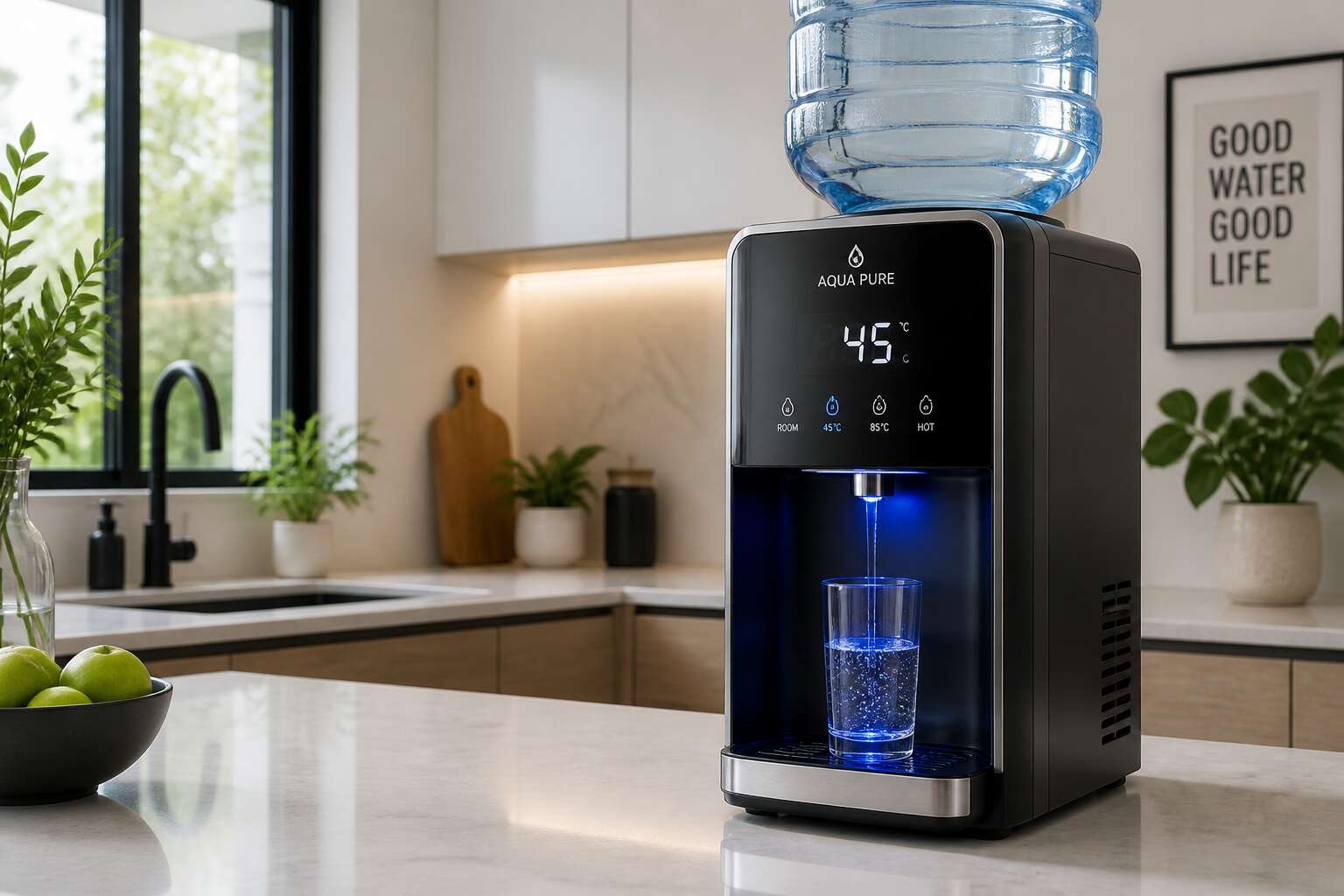
Understanding Electronic Water Dispensers
What Is an Electronic Water Dispenser and How Does It Work
Over 60% of Cape Town offices now rely on a water dispenser electronic instead of plumbed coolers. The difference is in the brain: a tiny microcontroller that reads input from sensors and decides exactly when to heat or chill.
When you press a button, the pump activates and pushes water through a carbon filter. Then a thermoelectric chip adjusts temperature to your preset, all within seconds. This precision cuts electricity costs and prevents the stale taste of reheated water.
I find the safety features equally compelling:
- Child lock systems that require a two second hold
- Auto shutoff when the tank runs dry
- Self diagnostic alerts for filter replacement
That is how the machine thinks, and trust me, it never surprises you!
Key Components: Sensors, Heating Elements, and Control Boards
Every water dispenser electronic depends on three core components. In Johannesburg offices, control boards govern thermistors that read water temperature to within half a degree. The heating element, often a thick film resistor, responds instantly to those readings.
The control board performs three quiet duties:
- It interprets signals from the thermistor and flow meter
- It switches the heating or cooling element on and off
- It logs error codes when components drift out of range
Piezoelectric sensors detect empty tanks, while the heating element cycles at precise intervals. This orchestration prevents the energy waste that plagues older dispensers. Each component works in concert, and the result is water served at the exact temperature you requested, every time!
Common Types: Top Loading, Bottom Loading, and Direct Pipe Models
Choosing between the three common configurations of a water dispenser electronic system settles how your office handles hydration. Top loading models rely on gravity and a five gallon bottle flipped onto the neck. They remain popular in smaller Johannesburg offices where floor space is scarce. Bottom loading units hide the bottle inside the cabinet. A small pump draws water upward, so nobody lifts heavy plastic and the office looks tidier. Direct pipe models connect straight to the building’s water supply. They suit high traffic kitchens and busy staff rooms, since the refill burden disappears entirely.
- Top loading requires manual bottle changes every few days
- Bottom loading needs periodic pump maintenance and air purging
- Direct pipe versions demand a plumber and stable water pressure
Each type serves a different environment. The number of cups filled each day reveals which model belongs in your office.
Smart Features: Touchscreens, Temperature Presets, and Auto Shutoff
The modern water dispenser electronic unit no longer just pours water. It responds to a fingertip, remembers preferences, and switches itself off when nobody is around. That feature alone saves offices thousands of rand each year.
Touchscreens replace mechanical buttons, giving precise control over dispensing volumes. Temperature presets let staff choose between chilled, ambient, and near boiling water. Auto shutoff monitors usage patterns and power surges, which matters in areas with unstable grid supply.
- Touchscreens simplify selection for visitors
- Presets reduce wait times during morning rush
- Auto shutoff prevents overheating and cuts standby power
I have seen these features remove the need for a kettle entirely. A smart system handles the daily hydration demands in busy offices.
Electronic vs. Manual Dispensers: Key Differences
A manual dispenser asks only one thing of you: pull the lever and hope the water lands in the cup. An electronic model replaces hope with precision. Manual units rely on gravity and brute force. Electronic units measure, heat, chill, and stop on command.
The real differences surface during a typical workday:
- Manual dispensers require physical effort from each user
- Electronic dispensers automate volume and temperature control
- Manual units give no warning when something fails
- Electronic units display error codes for maintenance staff
That last point matters more than it seems. When a manual dispenser leaks, you find out by stepping in a puddle. When a water dispenser electronic unit develops a fault, it tells someone before the floor gets wet. In a busy South African office, that difference saves money, time, and a great deal of mopping.
Essential Features to Look for in a Modern Dispenser
Instant Heating and Rapid Cooling Technology
Now that we understand the internal mechanics and models available, the true value of a water dispenser electronic hinges on its performance in two critical areas: heating and cooling. A machine that merely provides lukewarm water is a frustration, not a convenience.
Instant heating technology has evolved beyond simple coils. Modern units use powerful, direct heating elements that raise water temperature to a rolling boil in seconds, not minutes. This is essential for preparing tea, coffee, or baby formula without waiting. Rapid cooling systems, often employing compressor-based refrigeration rather than thermoelectric chips, can deliver genuinely icy water even in the high ambient temperatures common in South African summers. The difference is tangible.
– Boiling water: Delivered at 95°C to 100°C for proper extraction of flavours.
– Cold water: Chilled to between 5°C and 10°C, suitable for immediate consumption.
– Ambient water: Available at room temperature for cooking or mixing.
These capabilities rely on the power of the unit and the insulation quality of its tank. A dispenser with poor insulation will cycle its compressor or heater frequently, leading to higher electricity consumption and inconsistent temperatures. Look for models with thick internal insulation and precise thermostatic controls. This ensures that the first glass and the tenth glass come out at the same reliable temperature. The integration of these technologies transforms a simple appliance into a dedicated hydration station.
Child Lock and Safety Certifications
Without a functional child lock, a water dispenser electronic poses a direct burn risk to young children. Modern units address this with push-and-turn valves and electronic keypad locks that cut off hot water access immediately. Safety certifications deserve equal attention. A unit certified against SABS standards has passed audits for electrical leakage, material toxicity, and pressure integrity. Buyers should demand visible certification marks before purchase.
Essential safeguards to verify:
– Automatic child lock that re-engages after each pour
– Earth leakage protection built into the power circuit
– Food-grade, BPA-free materials verified by independent labs
Skipping these checks means accepting preventable risk. The quiet hum of the compressor should never mask a missing safety system.
Energy Efficiency and Standby Power Consumption
Here is a number that should worry you: your water dispenser electronic can waste more electricity in standby mode than a modern refrigerator. In South Africa, where load shedding punishes every unnecessary watt, that hidden draw is a luxury we cannot afford. Modern units now feature insulation upgrades and adaptive standby modes that cut energy use by up to 40 percent.
Look for compressors with inverter technology, which ramp down instead of switching off entirely. Also check for heating elements that maintain temperature with pulsed cycles rather than constant full blast.
- Vacuum insulated tanks to reduce reheating
- Smart timers that align with your usage hours
- Low wattage standby indicators
I have seen a water dispenser electronic that draws 60 watts just to keep a light on. That is not engineering, that is negligence. Prioritise models with an energy efficiency rating and documented standby consumption below 5 watts.
Filtration Systems and Water Purity Indicators
South African municipal water varies from one suburb to the next. A water dispenser electronic with a solid filtration system turns that unpredictability into a non-issue. Look for multi-stage filters that catch sediment, chlorine, and heavy metals leached from ageing pipes.
Purity indicators matter just as much. They alert you when a filter is exhausted, so you never drink through a spent cartridge. Some systems display total dissolved solids readings in real time. Others use colour coded alerts. Both approaches remove the guesswork, and I prefer the countdown type myself.
- Multi-stage carbon filtration for taste and odour
- Reverse osmosis options for higher contaminant loads
- UV purification stages for microbiological safety
- Filter life monitors with visible countdowns
The best water dispenser electronic units pair a strong filtration core with sensors that track water quality continuously. That pairing protects your health and your wallet, because you replace filters only when the unit tells you to.
Capacity and Dispensing Speed Considerations
A dispenser that runs dry mid-afternoon is useless. Capacity dictates how often you refill, while dispensing speed dictates how long you wait. Both factors shape daily convenience.
For a South African household, a 5 litre reservoir may suffice for solo users, but a 10 litre tank suits families. Hot water output matters equally. A sluggish flow turns a simple cup of coffee into a long wait.
- Reservoir size against household size
- Hot water dispensing rate in litres per minute
- Cold water recovery after heavy use
The best water dispenser electronic units pair adequate capacity with responsive pumps. I have seen large tanks paired with weak dispensers, and compact units that pour quickly. Test the flow before you commit!
Smart Connectivity and Voice Control Compatibility
There is a quiet shift happening in South African kitchens. The appliance that once stood in the corner, waiting for someone to press a button, now listens. A water dispenser electronic with voice control responds to your commands mid-conversation, and that changes how you interact with something as ordinary as water.
Smart connectivity goes beyond convenience. It removes friction. You are kneading dough, your hands are covered in flour, and you say the words. The machine does the rest. It can also notify you when elements need attention, which means fewer surprises during load shedding outages.
What matters most:
- Compatibility with voice assistants like Google Home or Alexa
- App based temperature presets and scheduling
- Status alerts for filters and heating cycles
These capabilities transform the water dispenser electronic from a functional object into a responsive presence in the household.
Installation, Maintenance, and Troubleshooting
Unboxing and Proper Placement for Best Performance
Unboxing a water dispenser electronic demands attention, since the internal control board is sensitive to jostling. I always inspect for shipping damage before connecting power, then choose a location that avoids direct sunlight and humidity. The unit needs a stable, level surface; otherwise, the liquid level sensors may misread.
For placement, verify the following factors:
– Clearance behind the cabinet for airflow
– Access to a dedicated grounded socket
– Distance from high-traffic areas to prevent accidental knocks
Maintenance centers on periodic descaling and sanitizing the reservoir, particularly with hard South African water. Troubleshooting a flickering display or inconsistent dispensing often begins with inspecting the inlet valve and power cord. A water dispenser electronic relies on precise thermal feedback, so any persistent temperature deviation warrants professional diagnosis rather than repeated resetting.
Step-by-Step Cleaning and Descaling Routine
Nearly every South African household knows the sting of a sudden element failure, with local water hardness accelerating mineral buildup at a startling rate. A water dispenser electronic unit requires more than just a quick wipe down. The initial installation dictates long term reliability, so ensure the inlet valve is properly connected to avoid airlocks. For optimal performance, confirm these conditions during setup:
– The supply line is free of kinks or sharp bends
– The unit sits perfectly level to prevent sensor misalignment
– The ambient temperature stays below 30°C to reduce compressor strain
Once installed, the real work begins. Routine descaling every three months prevents calcium deposits from coating the heating element. Mix a citric acid solution and run it through the hot water cycle, then flush with clean water. For the cold reservoir, wipe down the interior with a soft cloth and a mild vinegar solution. This maintenance preserves the thermal feedback accuracy that keeps temperatures steady.
When faults appear, approach them methodically. A dispenser that produces lukewarm water often signals a tripped thermal cutout, not a dead element. First, check the power cord for visible damage, then inspect the inlet valve for sediment blockage. If the touch panel becomes unresponsive, a simple power cycle often resets the control board. Persistent issues with the heating element warrant attention from a certified technician, as repeated resets mask deeper electrical faults.
Filter Replacement Schedules and Alerts
Every water dispenser electronic unit depends on its replacement filter. In South Africa, municipal water quality varies, so the filter’s lifespan hinges on your local supply. Install the filter according to the manufacturer’s orientation, then purge the system by running two litres through the cold tap. Set a reminder on your phone, because the dispenser’s alert light only appears after the filter’s rated capacity is exceeded. When the alert flashes, do not ignore it. A clogged filter strains the pump and compromises taste. Verify these three things before ordering a replacement:
- Check the inlet line for kinks
- Inspect the filter housing for cracks
- Confirm the dispenser’s timer settings
For a top loading model, replace the cartridge every six months in Gauteng, but every four months in coastal regions with higher sediment. Troubleshooting a persistent alert usually means the sensor needs recalibration, check the manual. If the display shows a red wrench icon, the control board may require a reset. To extend filter life, flush the system weekly for ten seconds.
Common Error Codes and Reset Procedures
“Ninety percent of service calls are caused by installation errors, not component failure.” That observation from a Johannesburg appliance tech remains a useful yardstick. Before you plug in that new water dispenser electronic, verify the voltage rating stamped near the power cord. South Africa’s grid frequently fluctuates, and a surge can corrupt the control board.
Dedicate a 10 amp wall socket to the unit. An extension lead with multiple appliances invites brownouts. When you first power on, listen for the pump. It should hum evenly. If it stutters, check the water level indicator and the internal tubing. A dry pump will overheat and trip the thermal fuse.
Ongoing maintenance focuses on the electrical contacts, not just the tank. Every quarter, switch off the breaker and wipe the power inlet pins with a dry microfibre cloth. Moisture and dust create a conductive film that leads to intermittent resets.
For error codes, consult the manual’s legend. Most units display E1 for a failed temperature sensor, E4 for a control board communication fault, and E5 for a stuck relay. A simple power cycle often clears these.
– First, unplug the unit and wait three full minutes.
– Second, press and hold the Child Lock button while plugging it back in.
– Third, release the button when the display resets to the default temperature.
If a red wrench icon persists, the memory chip may have captured the fault. That requires a factory reset through the service menu. Enter the code 087, then select “clear fault log.” This restores the unit without erasing your temperature presets.
Do not overlook the drain pan sensor. If it reports a leak falsely, remove the pan, dry the sensor contacts, and realign the float switch. The machine is trying to communicate something specific. Learn its language. A little patience with these diagnostic steps saves the cost of a service call.
Preventative Maintenance Checklist for Longevity
Installation errors surface after weeks. For the water dispenser electronic, a dedicated 10 amp socket and a stable voltage remain the first safeguard. The pump must hum evenly; a stuttering start signals trapped air or a failing component.
- Inspect the power inlet pins monthly
- Wipe the control board contacts quarterly
- Check the drain pan sensor alignment
Maintenance follows the machine’s own logic. A dry pump overheats and trips the thermal fuse! The error codes become a language: E1 for temperature failure, E5 for a stuck relay. Preventative care is the ritual that keeps the unit from ever displaying a fault.
Health, Safety, and Everyday Usage Tips
Safe Drinking Water Temperature Guidelines
At 70 degrees Celsius, skin tissue burns within a second. A water dispenser electronic can reach that output without any visible warning. The true safe span for drinking water stays between 18°C and 40°C, so hold 60°C as the absolute ceiling for anything that touches the inside of your mouth.
I keep these limits as my everyday guide:
- 18°C to 25°C for direct hydration.
- 40°C for infant formula, tested on the wrist.
- 60°C as the maximum for warm beverages, not for swallowing.
Scale formation shifts the temperature sensor slowly, a process accelerated by mineral heavy municipal water. I check with a probe thermometer each season in my own kitchen. South Africa’s varied water quality makes this simple habit worth the effort. The control panel will claim a perfect reading in winter, but the cup carries fact. That is the gap that matters.
Preventing Bacterial Growth in Tanks and Nozzles
The nozzle is the quiet intersection where warmth meets breath. South Africa’s mineral heavy water makes stagnation a real risk. A water dispenser electronic can host biofilm when the tank sits unused overnight or through a long load shedding period. Moisture clings to seals and the dispense lever, providing bacteria a habitat.
Keep these habits close:
- Flush a full cup through the hot nozzle each morning before first use.
- Wipe the nozzle and drip tray with a food-safe sanitising cloth every second day.
- Drain and air-dry the tank completely when the unit stands idle for more than a day.
Bacterial growth announces itself as a faint musty note in the first cup of the day, long before any sensor detects a problem.
Child Safety Features and Household Precautions
The child lock on a water dispenser electronic is a quiet guardian. In South African homes, the red hot water lever sits at toddler height, an invitation to disaster. The lock engages with a click, a small resistance that prevents a lifetime of regret.
Household precautions matter more than the certification sticker:
- Position the unit away from play areas and thoroughfares.
- Engage the child lock after every use, even during load shedding.
- Inspect the lock mechanism monthly, because mineral scale can jam the button.
A water dispenser electronic cannot judge intent. It only responds to pressure. The child’s curious finger finds the lever long before an adult notices. The lock is the thin barrier between a moment of distraction and a scream. Keep the unit unplugged when the household sleeps, and treat the hot tap with the same respect you would give a stove flame.
Best Practices for Office and High-Traffic Environments
In a Gauteng office, the water dispenser electronic becomes the busiest appliance by midday. The queue forms before nine. High-traffic environments test flow rate and hygiene protocols alike. A shared nozzle collects residue from every cup, every hand, every hurried refill.
Consider these practices for shared spaces:
– Wipe the dispensing nozzle with a food-safe sanitiser twice daily.
– Place a drip tray mat to reduce pooling water that breeds bacteria.
– Assign one person to monitor filter alerts weekly.
The office dispenser pours hundreds of litres weekly. That volume demands a schedule. The water dispenser electronic in a boardroom is not the same machine as the one in a home kitchen. It runs harder, heats more often, and accumulates scale faster. Treat it accordingly, with a descaling cycle every two months, not every six.
Water Quality Testing and Hygiene Maintenance
A water dispenser electronic never reveals the chemical truth inside its tank. It reads temperature and flow, not the bacterial load. Johannesburg municipal water shifts in chlorine content across the seasons, and those shifts enter the reservoir every time a refill takes place. So I test. Once a week I measure the cold output with a TDS pen, and every third month I deliver a sealed sample for a full bacteriological assessment.
The visible surface stays spotless, convincing enough to fool a casual glance. The particular risk hides in the inner seam of the tap and at the stagnation point between days of low use. This is why sample discipline matters more than wiping a glass front.
- Run the cold line for more than a minute before drawing the sample.
- Use single-use sterile collection jars, never a glass sitting on the shelf.
- Place the sealed bottle at four degrees and transfer it to a laboratory within two hours.
That order resembles cleanliness in a way that manual wiping can’t. The next step is the dispenser’s record, which is nothing without this trace.
Cost Comparison and Buying Guide
Budget-Friendly vs. Premium Dispenser Models
A recent survey by a local retailer found that nearly 60% of South African households prioritise upfront price over long-term running costs when selecting a water dispenser electronic. That initial saving often evaporates within a year. Budget models, typically priced under R1,500, rely on simpler mechanical thermostats and basic heating elements. They are slower and less precise. A premium unit, conversely, invests in sophisticated inverter compressors and advanced control boards that maintain consistent temperatures with less energy waste.
– The budget segment covers the core function of dispensing hot and cold water.
– The premium tier adds precise temperature presets and quicker recovery times.
– Replacement parts for cheaper units often cost more over three years than the machine itself.
Consider the total cost of ownership. A budget dispenser may consume up to 30% more electricity because its standby power is poorly regulated. The premium model’s insulation and smart standby modes reduce that loss. Warranties also tell the story. Budget brands offer a standard one-year cover. Premium manufacturers frequently back their products for three to five years, signalling confidence in their internal components. For the South African climate, where ambient temperatures fluctuate widely, the premium unit’s ability to adjust cooling output is a tangible advantage. Eventually, paying R3,000 more upfront for a water dispenser electronic with durable parts and lower running costs proves to be the more economical choice.
Top Brands and What They Offer
A water dispenser electronic is a commitment, not a one-off purchase. South Africans often compare sticker prices, but the real cost hides in replacement filters, energy consumption, and after-sales service. A unit that costs R2,500 but needs R900 of filters yearly can outspend a R4,000 model with longer-lasting cartridges.
Top brands differentiate themselves through support networks. Local manufacturers offer faster repairs and readily available parts, while imported names may promise sleek features but leave you waiting weeks for a technician.
- Defy: strong local service network
- KIC: budget-friendly parts availability
- Russell Hobbs: advanced temperature controls
Before buying any water dispenser electronic, check the consumable costs and warranty terms. The cheapest unit often becomes the most expensive one.
Operating Costs: Electricity, Filters, and Repairs
Electricity tariffs in South Africa climb annually, so the standby wattage on a water dispenser electronic deserves attention. Hot water tank models reheat constantly, while instant heat units only draw power when dispensing. That difference shows up on your monthly bill. Filters form the second cost line. A basic carbon cartridge costs around R150, while a multi-stage system can reach R400 per replacement. Check the rated lifespan. Three month cartridges outspend six month ones quickly.
- Compare standby wattage on the spec sheet.
- Ask filter prices before committing.
- Confirm local parts availability for repairs.
Repairs are the third cost. A water dispenser electronic with a sealed heating element is cheaper to service than one with a complex control board. Local brands keep parts in Johannesburg and Cape Town, so technicians fix units in one visit. Imported models often wait weeks for parts to arrive.
Where to Buy and What Warranty Coverage to Expect
Cost comparison starts with the purchase price, but the long term cost matters more. A water dispenser electronic with a sealed heating element costs more upfront, yet it keeps service bills low. Compare three models across a five year timeline.
Where you buy shapes your warranty experience. Retail chains in Johannesburg and Durban stock local brands with spare parts in the country. Online importers attract buyers with lower prices, but often require shipping the unit back for repairs. Ask the seller who handles claims.
- Check whether the warranty covers labour costs
- Confirm the claim process takes place in your city
- Ask if the warranty includes filter replacements
Most local brands back their water dispenser electronic units with a one year warranty on the control board and heating element. Some offer an extended two year plan for a nominal fee. Read the warranty terms before paying!
Final Checklist Before Making a Purchase
Cost comparison across five years changes the picture. A cheaper water dispenser electronic may need two service calls in that period, offsetting the initial savings. A premium model with a sealed heating element and reliable sensors often runs without fault for the same span. Calculate the total cost of ownership, not the ticket price alone.
Before you pay, run through this final checklist:
- Measure the installation space, including clearance for the bottle or direct pipe connection
- Confirm the plug type matches South African wall sockets
- Check the tank capacity against the number of daily users
Match the water dispenser electronic to the household size and usage pattern. A compact unit suits a single person, while a busy family needs a larger tank and faster dispensing speed. We see buyers regret the mismatch most often, so verify your needs before you commit.



0 Comments