Water Dispenser Basics and Purification Myths
What Exactly Is a Water Dispenser?
In a country where load shedding and municipal water disruptions are part of daily life, the water dispenser has become a household mainstay. It is a machine that dispenses water, either bottled or through a direct plumbing connection. That is the core of it. The device can offer cold, room temperature, or hot water at the push of a button. But the question that follows is simpler than it seems: does water dispenser purify water? The answer depends entirely on the model in front of you.
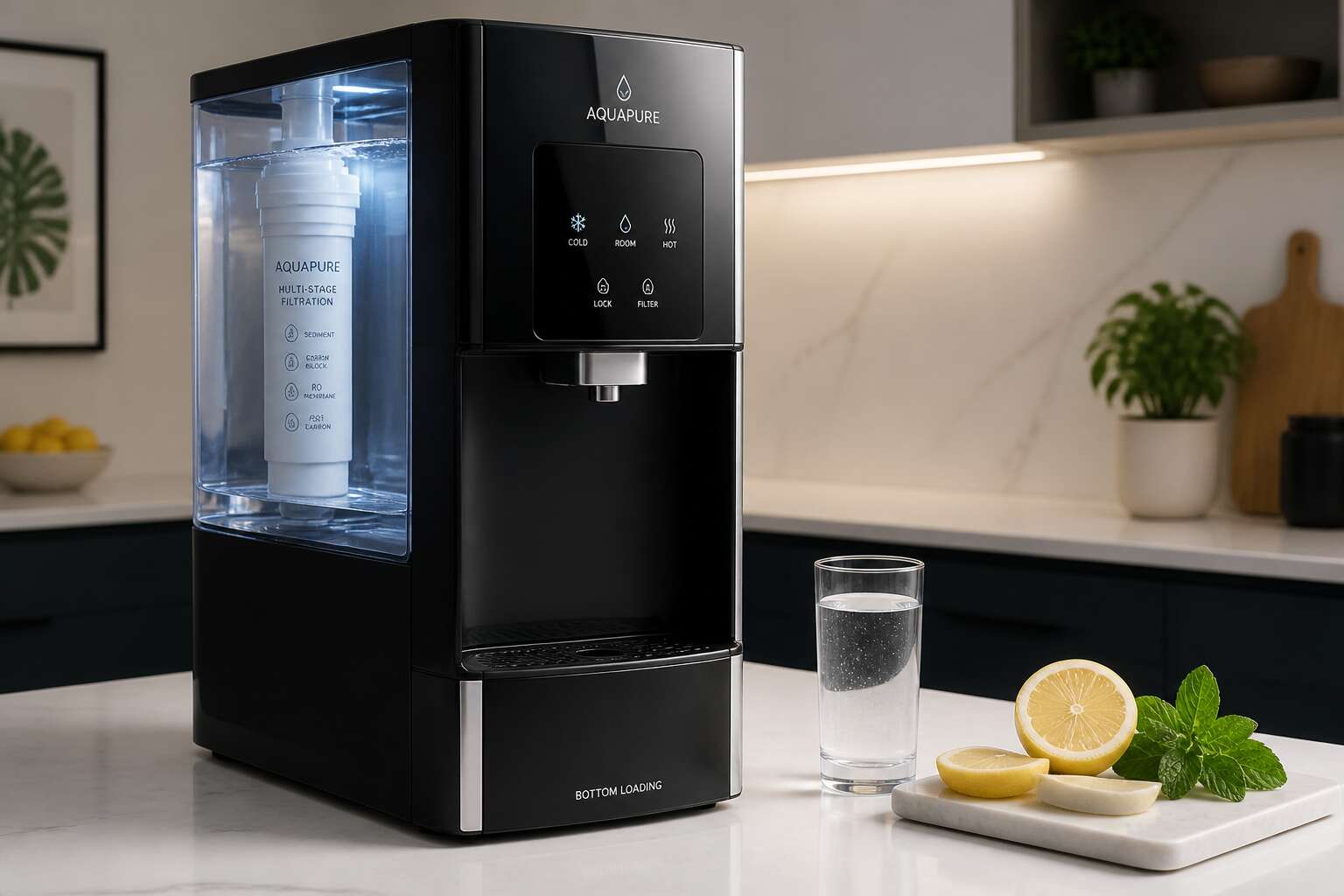
A basic bottle-top dispenser is essentially a gravity-fed tap. It does not filter. It does not treat. It simply stores and pours. A plumbed-in unit, however, may contain a filtration cartridge. That cartridge can reduce sediment or chlorine. But this is not the same as purification. Purification implies the removal of pathogens, which requires UV light or reverse osmosis. Understanding this distinction is the first step in separating marketing from machine. So when a salesperson claims otherwise, ask what the internal system actually does. That is how you get a straight answer to whether a water dispenser purifies water or merely pours it.
How Standard Dispensers Handle Water
Does a Water Dispenser Purify Water? The Truth About Your Office Cooler
Walk into any South African office or home, and you will see the same faithful appliance humming in the corner. It dispenses ice-cold water on a scorching Joburg afternoon, and it delivers steaming hot water for your morning Rooibos. But a nagging question often bubbles up alongside the bubbles: does water dispenser purify water, or is it just a fancy tap?
The answer might surprise you. Most standard units are simply reservoirs. They are storage tanks with a cooling element and a heating coil. They do not scrub a single germ from the water you pour. If you are filling it from a municipal supply, the water is only as safe as the pipes it travelled through before reaching your machine.
The Crucial Difference Between Dispensing and Purifying
We need to dismantle a common misconception. A basic bottle-top dispenser is a gravity-fed unit. You flip a five-litre bottle upside down, and gravity does the rest. This model does not filter, treat, or alter the water chemistry. It merely holds the liquid at a desired temperature.
However, the market has evolved. Plumbed-in dispensers now often house internal filtration systems. These systems can reduce sediment, chlorine, and bad tastes. But here is the catch: reducing taste is not the same as purifying. True purification means the removal of pathogenic microorganisms, heavy metals, and viruses.
If you want to know if your specific unit purifies, you need to look inside. Here is a quick breakdown of what you might find:
1. Basic Water Cooler: No filter. It relies entirely on the source water quality. It is purely a convenience device.
2. Filtration Dispenser: Contains a carbon block or sediment filter. It improves taste and odour but does not remove dissolved solids or bacteria.
3. Purification Dispenser: Equipped with a Reverse Osmosis (RO) membrane or Ultraviolet (UV) light. This genuinely neutralises pathogens and removes contaminants.
Why Municipal Water Still Needs a Second Look
In South Africa, the quality of municipal water can fluctuate. While the Department of Water and Sanitation sets standards, infrastructure challenges can lead to contamination between the treatment plant and your glass. This is why the distinction matters. If your dispenser only cools water, you are entirely exposed to whatever is in the pipeline.
A point-of-use purifier acts as a final barrier. A standard dispenser does not offer this barrier. It is vital to read the product specifications carefully. Look for the terms “RO” or “UV” in the description. If you see the word “filter,” assume it is for aesthetics, not safety.
The Heat Factor and Hidden Risks
There is another angle to consider. The hot water tank inside a standard dispenser can sometimes reach temperatures high enough to kill certain bacteria. However, the cold water side sits at the perfect temperature for bacterial growth. If the unit is not cleaned regularly, biofilm can form inside the reservoir. This means the dispenser itself can become a source of contamination, even if the input water is pure.
So, the direct answer to the question, “does water dispenser purify water?” is usually no, unless it specifically features a purification technology. The safest approach is to verify the system specifications before assuming your water is pristine. If the unit is a basic cooler, you are drinking the water exactly as it entered the tank, no more, no less.
Filtration vs. Purification: Key Differences
Walk into a bustling Pretoria office and ask the person refilling their bottle: does water dispenser purify water? Most will shrug, assuming the machine performs some quiet miracle. The persistence of this belief is remarkable, yet the mechanisms at play tell a different story. A dispenser is fundamentally a temperature controller, not a treatment facility. The confusion arises because the industry uses “filter” and “purify” interchangeably, even though they represent vastly different processes. This semantic blur has real consequences for your health decisions.
Filtration is a physical barrier. It catches sediment, chlorine residue, and larger particles that affect taste and clarity. A carbon block, for instance, improves the flavour profile of your water by trapping organic compounds. But filtration does not dismantle viruses or dissolve heavy metals like lead or arsenic. Those microscopic threats slip through the mesh as if it were open air. Purification, on the other hand, is a chemical or molecular process. Reverse Osmosis forces water through a semi-permeable membrane at a molecular level. Ultraviolet light disrupts the DNA of pathogens, rendering them inert. The distinction is not academic, it is a practical guide to what your dispenser actually removes.
Before you settle on a standard unit, inspect the internal configuration. The entire answer to does water dispenser purify water depends on these components.
– Sediment filter: removes rust and dust particles, purely aesthetic
– Carbon filter: reduces chlorine and odour, improves taste
– RO membrane: strips dissolved salts, heavy metals, and microorganisms
– UV lamp: neutralises bacteria and viruses without chemical residue
If the unit contains only the first two, you are drinking filtered water, not purified water. The municipal supply in many South African municipalities is already potable, but it travels through aging pipes before reaching your tap. Those pipes introduce rust, biofilm, and sometimes sewage ingress during heavy rains. A simple filter will not catch those threats, it merely makes the water look and taste better. A purification system provides that final, absolute barrier between the pipe and your glass.
The distinction matters most during water outages, when municipalities switch sources or restore pressure. That is when contamination spikes occur. If your dispenser lacks a purification stage, you remain exposed to whatever entered the distribution network. Understanding the difference transforms you from a passive consumer into a discerning user. You stop asking whether the machine is working and start asking what exactly it is removing. That is a question worth answering before your next refill.
Types of Dispensers and Their Built-in Treatment Systems
Bottled Water Dispensers: No Purification Involved
For bottled water dispensers, the answer to does water dispenser purify water is a firm no. These units hold a sealed container and release its contents on demand. No treatment system exists between the bottle and your glass. The purification happens upstream, at the bottling plant, before the water reaches your home or office.
What you see is what you get. The dispenser maintains temperature, but it does not alter the water’s chemistry. A refrigerator-style cooler chills, a hot tank heats, and nothing else occurs. Some models add a drip tray or a safety lock, yet none filter or purify water.
Consider what a bottled dispenser lacks:
- No carbon filter for taste
- No sediment screen
- No UV light or reverse osmosis membrane
That absence defines the category. You rely entirely on the supplier’s quality. If the bottle is contaminated, the dispenser passes that contamination straight to you.
Point-of-Use Dispensers with Basic Filters
Point-of-use dispensers with a basic filter put the does water dispenser purify water question into a narrower frame. These units attach to a municipal supply line and run water through a small cartridge before it reaches your glass. Activated carbon does the heavy lifting there, catching chlorine, earthy odours, and rust flakes that break loose from older suburbs.
A filter this size is not a purifier. The pores are far too generous to stop dissolved metals, viruses, or bacterial colonies. So the honest answer, does water dispenser purify water in this category, is yes only in terms of taste and clarity, not microbial safety.
The whole treatment stack is smaller than most people expect:
- A carbon block for chlorine and odour
- A fine sediment screen for grit
- Occasionally an ion-exchange resin for scale
That’s the complete list. South African tap water arrives at municipal pressure, normally potable. These dispensers smooth the final mouthfeel. They do not change the underlying safety profile of the water.
High-End Dispensers with Reverse Osmosis
High-end dispensers with reverse osmosis force the question of does water dispenser purify water into a different realm. These units do not merely polish municipal supply; they strip it down to near H2O. The RO membrane, with pores measured in angstroms, blocks dissolved metals, nitrates, and microbial cysts that basic carbon filters never touch. Consider the treatment stack:
- Sediment pre-filter to catch grit
- Carbon block to remove chlorine
- Reverse osmosis membrane for dissolved solids
That membrane operates under pressure, pushing water through while contaminants are flushed away. For a South African home, this means the does water dispenser purify water answer shifts from taste to true purification. Yet the system still relies on your incoming water being municipally potable. RO is a safety net, not a miracle worker.
UV Light Purification in Modern Dispensers
In South Africa, where municipal water quality fluctuates between supply zones, the question of does water dispenser purify water gains sharper relevance. Beyond the RO systems discussed previously, modern dispensers employ targeted treatment layers that address specific biological threats.
UV light purification represents a significant shift in how dispensers handle microbial safety. Unlike carbon blocks that trap particles or membranes that reject dissolved solids, ultraviolet lamps deliver an electromagnetic pulse that scrambles the DNA of bacteria, viruses, and protozoa. The water passes through a quartz sleeve and receives a lethal dose of UV-C light. This process kills pathogens without adding chemicals or altering the water’s mineral profile. For homes relying on borehole water or tank storage, this mechanism offers genuine purification depth that standard filters cannot match. However, UV treatment only neutralizes organisms at the point of exposure; it leaves behind dead cells and any chemical contaminants within the water column.
Some modern point-of-use units pair multiple defenses. You might find:
– Sediment filtration for visible particles
– Activated carbon for taste and odour compounds
– UV chamber for biological disinfection
– Optional mineral cartridge for post-treatment balance
This stacked approach means the does water dispenser purify water answer depends entirely on what the unit houses. A dispenser with only a carbon filter improves aesthetics but fails against viruses. A dispenser with UV, conversely, sterilizes effectively while ignoring heavy metals. The distinction matters for any homeowner weighing options. Thermal treatment units, which boil water before cooling it for dispensing, also enter this conversation, using heat as the purification mechanism. These systems kill everything, but they consume significant electricity and take time. The practical choice hinges on your water source, the contaminants present, and whether you need chemical removal or biological sterilization.
Countertop vs. Floor-Standing Models
Countertop dispensers sit on a counter and connect to a tap. Their compact size limits the number of treatment stages. Most include just a sediment filter or a carbon block, so they rarely purify water fully. For households asking does water dispenser purify water, a countertop unit often falls short against microbial threats, though some now include a small UV chamber for biological protection.
Floor-standing models occupy more space but allow manufacturers to integrate serious technology. A single unit may stack sediment filtration, activated carbon, UV light, and a reverse osmosis membrane. For South African homes drawing from boreholes or aging pipes, these units answer does water dispenser purify water with a confident yes for most contaminants. Larger tanks and faster dispensing also suit busy settings. Choose a floor-standing model when your water source demands comprehensive treatment; choose countertop when space is scarce and your municipal supply is already well-treated.
How to Tell If Your Dispenser Actually Purifies Water
Reading the Spec Sheet and Manual
Your dispenser’s manual is not a bedtime story, but it holds the truth. If the spec sheet mentions reverse osmosis, ultrafiltration, or UV light, you have a genuine purification setup. If it only talks about carbon cartridges, then your appliance is a glorified taste adjuster, not a purifier.
Look for a micron rating on the filter. Anything above 1 micron is merely straining debris. Also check for certification against standards like NSF 53 or SANS 241. If the paperwork avoids these specifics, you can safely answer the question does water dispenser purify water with a firm “no”. Marketing loves the word “purify”, but the manual reveals whether your machine actually earns the label.
Recognizing NSF and WQA Certifications
Certifications strip away the marketing haze. When you ask does water dispenser purify water, the answer hides in the seals on the box, not in the glowing adjectives of the packaging. NSF and WQA do not hand out badges for expensive plastic. They test against public health standards. Here is what to look for:
- NSF/ANSI 53 for cyst and heavy metal reduction
- NSF/ANSI 58 for reverse osmosis performance
- WQA Gold Seal for verified contaminant removal
A dispenser that carries these marks has proven itself. One that only mentions carbon filters is a taste enhancer, not a purifier. The absence of third-party validation tells you everything. If the seal is missing, you already have your answer. Trust the certification, not the sales pitch.
The Role of Filter Replacement Indicators
The previous sections dealt with certification and technical specs, but the ongoing question of does water dispenser purify water rests on a simpler, more immediate factor: the service indicator. A machine can have a reverse osmosis membrane and an ultraviolet lamp, yet if the user ignores the replacement prompt, the output can degrade into a breeding ground for bacteria. The indicator is not a suggestion; it is a mechanism for accountability over time.
For South African households, where municipal supply can fluctuate, the warning light or sticker serves as the primary safeguard. The signs are usually obvious enough:
– A flashing red LED or a message on the digital screen.
– A gradual decrease in water flow or pressure.
– A change in taste, often described as flat or slightly metallic.
When that signal appears, the filter has reached its adsorption limit. The carbon block is saturated, and the micron rating no longer holds. At that point, the unit is merely moving water through a housing. It is no longer removing cysts, lead, or chlorine byproducts. The answer to does water dispenser purify water depends entirely on this maintenance cycle, not on the original purchase price. The most expensive dispenser is useless the moment the pre-filter clogs.
The local water quality in regions like Gauteng or the Western Cape can demand more frequent changes than the manual suggests. A unit that services a busy office or a large family will see its capacity exhausted sooner. Pay attention to the interval count, but also trust the sensory cues. A clean tank and a fresh wick are not enough; the internal cartridge is the only thing separating you from the raw supply. Ignore the indicator, and the device becomes a passive conduit.
Simple Home Water Testing Methods
A whirlpool of marketing claims often leaves the South African homeowner wondering whether their gleaming countertop appliance is a genuine guardian or a glorified decanter. The first way to test the metal is with a simple TDS meter, a small device that measures total dissolved solids. Run a glass of tap water and record the reading, then run a glass from your dispenser. A significant drop in parts per million indicates active filtration is occurring. If the numbers are nearly identical, you have your answer on whether your specific unit truly purifies.
The question of does water dispenser purify water can also be answered with your own senses, though more subtly. Pour a glass and hold it up to the light. Look for any cloudiness or floating particulates that should have been captured by a sediment filter. Next, fill a clean glass and step away for a moment. A mineral or flat taste might indicate a depleted cartridge, while a hint of chlorine suggests the carbon block has lost its battle. For a more decisive check, consider a basic chlorine test strip, which is an inexpensive addition to any shopping list. The presence of this disinfectant in your dispensed water is a clear failure of the purification process.
Finally, observe the physical quality of the water in action. Does the stream from the spout remain consistent, or does it sputter and slow down as the tank refills? A noticeable restriction in flow often signals a clogged pre-filter.
– Check the water clarity in a clear glass against a white background.
– Sniff the water immediately after dispensing for any chemical or musty odor.
– Taste a small sip after it has reached room temperature to detect off-flavors.
These quiet, empirical checks provide more honest answers than any warranty sticker ever could. Trust the simple evidence in your kitchen rather than the promise on the box.
Common Water Purification Technologies Explained
Activated Carbon: The Most Common Filter
Activated carbon is a common component inside many basic dispensers. It works by adsorption, where impurities cling to the carbon’s surface. So does water dispenser purify water with this method? Partially. Carbon excels at removing chlorine, sediment, and organic compounds that affect smell and taste. It cannot remove dissolved minerals, sodium, or harmful microbes. That means a dispenser with only activated carbon is not a purifier in the strict sense. The typical benefits include:
- Better flavour from reduced chlorine
- Clearer appearance from trapped particles
- Fewer chemical odours
For South African consumers, this is a practical choice if the local water is already declared safe. But for borehole water or areas with bacterial concerns, carbon alone is insufficient. You would need a dispenser with UV or RO technology.
Reverse Osmosis: Thorough but Wasteful
Reverse Osmosis takes purification further. It forces water through a semipermeable membrane. This catches dissolved minerals, heavy metals, and even some microbes. So does water dispenser purify water with RO? Yes, far more thoroughly than a carbon filter ever could.
That thoroughness comes at a cost. Many systems waste two to three litres for every litre they produce. The rejected water goes to the drain, which matters for South African households on water meters.
For borehole users, the trade-off is often worth it. RO removes what carbon cannot:
- sodium and nitrates
- heavy metals like lead
- fluoride and dissolved salts
That is the difference between filtration and true purification.
UV Light: Killing Microorganisms Without Chemicals
UV light offers a different approach to answering does water dispenser purify water. Instead of trapping particles, it disrupts the DNA of living cells. This prevents bacteria, viruses, and protozoa from replicating.
Dispensers with UV chambers expose every drop to intense light. The process is chemical free and does not alter the taste of your water. It is an elegant solution for biological threats.
However, UV does nothing for dissolved chemicals, heavy metals, or sediment. It targets only living organisms. Common microbes neutralized include:
– E. coli
– Salmonella
– Giardia
– Cryptosporidium
For South African homeowners, UV adds a powerful layer of defence. It works best when combined with a physical filter that removes visible debris first. That pairing ensures the light reaches every organism without shadow or blockage.
Distillation: Boiling and Condensing
Distillation takes a more absolute approach. Water is heated until it vaporizes, leaving behind dissolved solids, metals, and most chemical contaminants. The steam condenses back into liquid form in a separate chamber. This is the same process nature uses to make rain, but done in a controlled environment.
A dispenser with a built-in distiller answers the question does water dispenser purify water with certainty. It removes impurities that filters cannot touch, including:
- Nitrates
- Fluoride
- Lead
- Bacteria
However, the process also strips beneficial minerals like calcium and magnesium. That leaves a flat taste, and the energy required to boil water continuously makes these units uncommon in everyday dispenser designs. They appear more often in labs or homes with specific water quality issues.
For South African households facing uncertain municipal supply, distillation remains a reliable fallback. But if you ask does water dispenser purify water across the market, most models rely on filtration instead, simply because distillation is slow and costly.
Ion Exchange for Hard Water
Water hardness varies wildly across South Africa. Cape Town sits on the softer end, while Free State towns draw from mineral-heavy boreholes. Those regions see scale build up inside dispensers. Ion exchange exists for this problem. Resin beads inside a cartridge carry sodium or potassium ions. When hard water flows past, calcium and magnesium trade places with those ions. The water softens.
Does water dispenser purify water through ion exchange? It softens, but softening is not purification. Microorganisms and organic contaminants pass through untreated. The question, does water dispenser purify water with this single technology, gets an honest no. Manufacturers pair ion exchange with activated carbon in most dispensing units. That layered setup handles hardness and contamination in one pass.
Dispenser heating elements suffer most from hard water. Scale coats the element within months, reducing efficiency and shortening the unit’s life.
Sediment Filtration as a Pretreatment
Before any chemical wizardry occurs, the water must first lose its physical baggage. Sediment filtration acts as the bouncer at the club, turning away the grit that arrives uninvited from municipal pipes or aging borehole infrastructure. In South Africa, where seasonal rains churn up supply lines, this first line of defense is not a luxury. It is a necessity. Sand, rust flakes, and silt will clog finer filters downstream and abrade internal valves. This stage does not answer whether does water dispenser purify water, because it does not attempt to. It merely clears the throat before the real conversation begins.
Think of it as preparing the canvas. A 5 micron sediment cartridge catches particles invisible to the naked eye, protecting the delicate membranes and carbon blocks that follow. This pretreatment extends the lifespan of the entire system. Without it, a dispenser connected to a JoJo tank might struggle with algae residue or suspended clay. The physical removal here is measurable, not a marketing fantasy. You can see the proof when you replace the cartridge and find a brown, sludgy horror show trapped inside. That is the water you were drinking. Not anymore.
What this stage deliberately ignores is the chemical and biological spectrum. Dissolved salts, heavy metals, and bacteria are far too small for a sediment matrix to catch. So the question, does water dispenser purify water with only this filter, receives another honest no. But here is the social nuance. A dispenser that skips this step in a dusty region like the Karoo will fail spectacularly, and quickly. The expensive carbon block will suffocate within weeks. The UV lamp will cast its light on shadowed, murky water, rendering it useless. Sediment filtration is the unglamorous foundation, the quiet, hardworking relative at the family gathering. It does not boast. It just ensures the expensive relatives upstairs can do their jobs. For a complete answer on purification, we must look at the next layer, the activated carbon, which finally starts addressing taste and chemical intrusion.
Pros and Cons of Relying on a Dispenser for Clean Water
Convenience vs. Ongoing Filter Costs
The convenience of a modern dispenser is undeniable, but is that cold stream of water actually pure? This is the heart of the matter for many South African households. When you ask yourself, does water dispenser purify water, you must look beyond the cabinet and the tap. The simple truth is that a standard unit is only a delivery system. It brings tap water to you without a second thought. The expensive part arrives with the ongoing maintenance. Those filters and those UV lamps require money to replace.
You face a trade off between the ease of use and the subscription like cost of consumables.
Every few months, you need to buy a new sediment filter or a carbon block. The cost may be small at first, but it adds up over a year. If you use a point of use model, you are at the mercy of the manufacturer’s pricing for proprietary filters. It is a steady stream of small payments that some find annoying. However, you cannot ignore the health benefit. Changing these parts is not optional if you want clean water. The actual price of the dispenser is often the cheapest part of the ownership experience.
- You pay for the initial unit, installation, and possibly a plumber.
- The ongoing filter replacements happen every 3 to 6 months.
- The annual operational cost can approach a third of the machine’s price.
The question of does water dispenser purify water depends entirely on your willingness to pay. A cheap machine with a neglected filter is a health risk, not a solution. A well maintained system provides peace of mind that is worth the expense. You are essentially renting the purification service. It is a transaction for the body, not the bank account.
Maintenance and Hygiene Considerations
The real answer to whether a dispenser purifies water lies in the maintenance schedule you set for yourself. A dispenser with a reverse osmosis system and a UV lamp is a formidable barrier. The pros are clear: you control the quality of the water at the point of use. You avoid the heavy lifting of bottled water and you get consistent taste. The cons, however, are tied directly to neglect. A filter that has exceeded its lifespan becomes a Petri dish. It stops removing contaminants and starts contributing to the biology of the water. This is not a hypothetical; this is the fate of many office units.
Hygiene is the silent variable in this equation. The internal reservoir and the spout are breeding grounds for biofilm if ignored. You might be paying for a fancy filtration method, but if the nozzle is slimy, you are drinking the slime.
– Sediment filters clog silently, reducing water pressure and efficiency.
– Carbon blocks saturate, releasing previously trapped organic compounds.
– UV lamps lose their intensity, allowing microorganisms to pass through unchanged.
The unit itself demands respect. A routine wipe-down of the exterior is cosmetic. The internal sanitisation, however, is the real work. Ask yourself if your dispenser purifies water or simply stores it. The hardware is only as good as the last person who replaced the cartridge. If you are not the type to mark the calendar for a filter swap, the machine is just a tap with a thermostat. The question of whether it purifies is then answered with a shrug, not a guarantee.
Impact on Taste and Mineral Content
The crisp, mineral-free taste of purified water is often the first clue that your dispenser is doing more than just chilling. That flavour profile is a direct result of the filtration method. Systems like reverse osmosis strip out dissolved solids, which changes the mouthfeel and the taste. This is a clear advantage if you dislike the earthy or metallic notes from municipal supplies. However, this same process is indiscriminate. It removes beneficial minerals like calcium and magnesium alongside the unwanted contaminants.
This mineral removal is a double-edged sword. You get consistency in every glass, but you lose dietary contributions you might otherwise gain from tap water. Many people then add mineral drops back into their water, which is an extra step and an extra cost. The question of does water dispenser purify water becomes less about the hardware and more about what you are willing to trade. You are exchanging natural mineral content for the peace of mind that comes with known purity. The impact on taste is undeniable, but you must decide if the stripped-down result is what your body needs.
Environmental Footprint of Dispenser Use
Understanding whether does water dispenser purify water is only one aspect of ownership. Relying on a dispenser creates a dependency on both electricity and replaceable components. The pros are clear: a consistent reduction in disposable plastic bottles heading to South African landfills and a steady supply of treated water. Yet, this convenience carries a weight.
On the downside, many purification systems waste significant water during filtration. You might also consider the carbon footprint of manufacturing the unit and the filters that need swapping out. Here is what often surprises people:
- Standby energy draw from coolers and chillers.
- The journey of spent filters to the landfill.
It is a trade-off between immediate water quality and long term ecological impact. The question of does water dispenser purify water becomes less relevant if the environmental cost is too high.


0 Comments